Manufacturing Expert
Throughout history, certain manufacturing facilities have transcended their role as mere production centers to become catalysts of innovation, economic transformation, and social progress. These industrial titans have redefined how we conceive, design, and produce the products that form the foundation of modern civilization. From the steam-powered mills that launched the Industrial Revolution to today’s smart factories integrating artificial intelligence and robotics, these manufacturing powerhouses have consistently pushed the boundaries of what’s possible in industrial production.
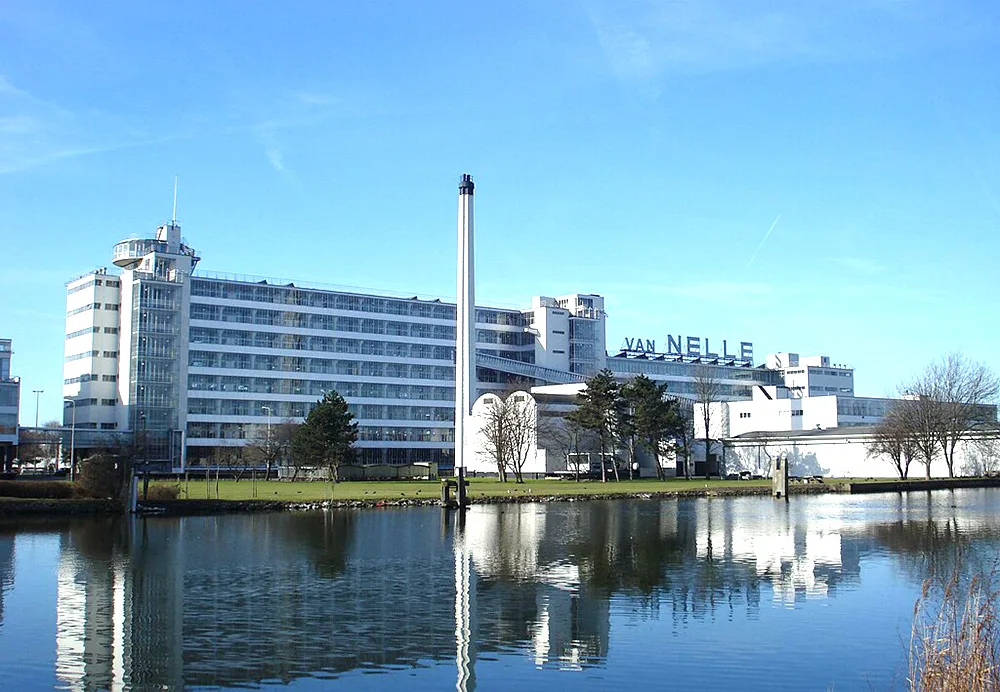
In the heart of Rotterdam stands a monument to industrial innovation that fundamentally changed how the world views manufacturing spaces. The Van Nelle Factory, constructed between 1925 and 1931, emerged from the visionary minds of architects Johannes Andreas Brinkman and Leendert van der Vlugt, with contributions from modernist furniture pioneer Mart Stam. This extraordinary facility was designed to process coffee, tea, and tobacco while embodying revolutionary architectural and social concepts that would influence industrial design for decades to come.
The factory introduced the groundbreaking concept of the “daylight factory,” utilizing reinforced concrete, steel, and expansive glass surfaces to create an entirely new paradigm for industrial architecture. The building’s glass curtain walls and open floor plans departed dramatically from the heavy masonry and dense layouts that characterized industrial buildings of that era. This innovative approach demonstrated that manufacturing facilities could achieve both exceptional functionality and aesthetic beauty.
The complex comprises three main processing buildings dedicated to tobacco, tea, and coffee production, complemented by warehouses, storage facilities, a boiler house, a chimney, and an elegantly curved office block. The main tobacco processing building rises eight stories high and extends over 300 meters in length, showcasing the impressive scale of early 20th-century industrial architecture. The buildings were ingeniously designed to operate from top to bottom, with raw materials deposited on the highest floor and each processing step moving products to the floor below.
Technical sophistication permeated every aspect of the design. Mushroom-shaped columns integrated seamlessly with floors, eliminating the need for traditional beams, while steel-framed glass curtain walls maximized natural light penetration. Glazed elevated transport bridges connected the upper floors of the main buildings, allowing workers to move efficiently between structures regardless of weather conditions.
The facility pioneered worker welfare in industrial settings, providing sports fields for recreation, factory gardens for lunch breaks, and advanced sanitation facilities. For the first time in industrial history, workers could take daily showers at their workplace, rather than the traditional weekly bath at home—a revolutionary improvement in working conditions.
The architectural impact was immediate and profound. In 1932, Le Corbusier visited the facility and declared with enthusiasm that it represented “astonishing evidence of the way that life will be!” Prominent architects of the era described it as “the most beautiful spectacle of the modern age” and “a poem in steel and glass.”
Today, the Van Nelle Factory stands as a UNESCO World Heritage Site, recognized in 2014 for exemplifying the ideals of the New Objectivity movement in the Netherlands. The facility has successfully transformed into a hub for creative industries, demonstrating the timeless quality of its design and its adaptability to changing economic needs.

Dresden’s Yenidze Cigarette Factory represents one of the most architecturally audacious industrial buildings ever conceived. Constructed between 1907 and 1909 under the design of architect Martin Hammitzsch and the direct supervision of owner Hugo Zietz, this facility challenged every convention of factory design with its distinctive, mosque-like appearance.
The building’s exotic aesthetic served as a sophisticated advertising platform for the oriental tobacco and Cigarette Factory housed within. The structure features a large, colored dome and chimneys designed to resemble minarets, creating an unmistakable silhouette that became synonymous with luxury tobacco products. The architectural inspiration was derived from the Mamluk funerary architecture of Egypt, specifically the Mamluk tomb of Khair Bak in Cairo.
Beneath its ornate exterior lay cutting-edge engineering technology. The Yenidze is believed to be Germany’s first reinforced steel skeleton construction, representing revolutionary structural innovation hidden behind its decorative facade. The tobacco production process occupied five floors, while the large dome housed relaxation and recreational areas for employees.
The facility revolutionized worker amenities, providing healthcare services, electrical lighting, changing rooms, restrooms, and cooked meals – all unprecedented inclusions for industrial facilities of that era. The factory was equipped with modern cigarette manufacturing machinery capable of producing thousands of cigarettes per hour alongside vast halls where skilled workers, primarily women, crafted hand-rolled cigarettes of exceptional quality.
The building’s aesthetic reinforced the tobacco brand’s appeal, creating associations with cultural refinement, mysticism, and exoticism that became integral to the products manufactured within. This innovative approach demonstrated that industrial buildings could function as landmarks and cultural symbols while maintaining their productive efficiency.

Ford’s Highland Park Plant fundamentally transformed manufacturing through the introduction of the moving assembly line in 1913, establishing the template for modern mass production that would influence industries far beyond automotive manufacturing. Henry Ford recognized that the Model T’s growing success required more spacious production facilities, leading him to acquire 60 acres in Highland Park, an enclave within Detroit’s boundaries.
The revolutionary breakthrough occurred in April 1913 when a production engineer in the flywheel magneto assembly area experimented with a radical new approach. The operation was divided into 29 separate steps, with workers placing only one component before pushing the flywheel down the line to the next employee. This division of labor reduced the time required for one worker to assemble a flywheel magneto from 20 minutes to just 13 minutes, eventually optimized to five minutes.
On October 7, 1913, the first moving assembly line was implemented at Highland Park. A chassis was pulled slowly across the factory floor by rope and windlass, with parts and 140 assemblers stationed along a 150-foot line. As the winch dragged the chassis across the floor, workers systematically attached components to the vehicle. This revolutionary system reduced production time for a single vehicle from 12 hours and 30 minutes to five hours and 50 minutes.
Continuous improvement efforts further refined the system. A power-driven “endless” conveyor system was installed, flush with the floor and wide enough to accommodate the chassis with space for workers on both sides. By 1914, these optimizations had reduced assembly time to just 93 minutes.
This dramatic reduction in production time made automobiles accessible to the general population for the first time and established manufacturing principles that would be replicated across countless industries worldwide. The Highland Park innovations demonstrated how systematic analysis and continuous improvement could revolutionize production efficiency while maintaining quality standards.

Volkswagen’s Transparent Factory in Dresden represents the pinnacle of automotive manufacturing transparency and environmental consciousness. This €186 million facility is situated in the heart of Dresden, an 800-year-old city renowned for its arts and craftsmanship, creating a unique juxtaposition between industrial production and cultural heritage.
The factory’s walls consist almost entirely of over 290,000 square feet of glass, with floors wholly covered in Canadian maple. The facility operates without smokestacks, loud noises, or toxic byproducts, demonstrating that automotive manufacturing can achieve both cleanliness and efficiency. The transparent design allows the public to observe the manufacturing process, transforming industrial production into a form of public art.
The facility handles final assembly exclusively, with all heavy industrial operations, including stamping, welding, and painting, conducted on-site in Zwickau. Painted vehicle bodies arrive by truck, while the remaining 1,200 parts and 34 preassembled components are shipped to a remote logistics center three miles away. Most remarkably, trams running on Dresden’s public transport tracks transfer these components from the logistics center to the factory.
The innovative material handling system demonstrates advanced logistics integration with urban infrastructure. Trams arrive at the facility’s lowest level, where parts are unloaded and stocked in sequence for just-in-time delivery to their designated vehicles. Painted bodies are stored in a multi-story area, and when the production schedule requires a specific body, it is retrieved from storage and loaded onto the conveyor system on the second floor.
This facility exemplifies how modern manufacturing can integrate seamlessly with urban environments while maintaining the precision and efficiency required for luxury automotive production. The transparent factory concept has influenced industrial architecture worldwide, demonstrating that manufacturing facilities can serve as both productive spaces and cultural attractions.

Toyota’s Takaoka Plant introduced the world to the Toyota Production System (TPS), a lean manufacturing approach that has become the global standard for production practices across various industries. The facility embodies Toyota’s philosophy of achieving complete waste elimination in pursuit of the most efficient manufacturing methods possible.
The Takaoka facility, particularly the advanced Takaoka #2 line, represents the pinnacle of flexible manufacturing. This line has been characterized as “the Judo fighter of car plants: Quick on its feet, flexible, and smart.” The facility demonstrates remarkable efficiency improvements through innovative engineering solutions that prioritize human workers over complex machinery.
A striking example of this philosophy is evident in the process of installing a spare tire. While the older Takaoka #1 line employs a robot requiring 57 seconds to install a spare tire, creating a production bottleneck, the Takaoka #2 line utilizes a worker with a specially designed cart featuring long arms. The worker wheels the cart around and installs the tire in a Prius in just 17 seconds, using only springs and counterweights rather than electric cables or pneumatic systems.
The facility’s flexibility extends to managing production capacity. Takaoka II can adjust its capacity to increase or decrease while maintaining consistent production costs. The factory retains impressive production statistics: a cycle time of one day from stamping the body shell to completion, a throughput of 1,200 vehicles per day (nearly one car every minute), and a defect rate of almost zero percent on final inspection.
The production system operates based on one month of confirmed orders plus projections for the following two months, with built-in flexibility to adjust if the projections prove inaccurate. This approach epitomizes the kaizen philosophy, with collective worker responsibility for quality supporting the Jidoka pillar – building quality into the process and preventing defects from proceeding to the next stage.

Boeing’s Everett Factory holds the distinction of being the world’s largest building by volume, spanning 98.3 acres and boasting a volume exceeding 472 million cubic feet. This massive facility, initially constructed in 1967 for Boeing 747 production, has undergone several expansions to accommodate new aircraft programs, including the 767, 777, and 787 Dreamliner.
The scale of the Everett facility defies comprehension. The entire complex spans approximately 1,000 acres and extends across both sides of State Route 526, also known as the Boeing Freeway. More than 5,000 widebody aircraft have been manufactured at the Everett factory since its opening, establishing it as one of the most productive aerospace manufacturing facilities in history.
The facility functions like a small city, housing 36,000 workers and featuring its own fire department, banking services, daycare facilities, medical clinic, and water treatment plant. The operational complexity is evident in its infrastructure: the building includes an intricate tunnel system for utilities and personnel movement, utilizes 26 overhead cranes along 39 miles of tracks for aircraft assembly, and accommodates expansions for various aircraft programs, including the 777X’s composite wing fabrication.
During World War II, the plant served as a production site for the B-17 Flying Fortress, cementing its place in aviation history. The facility continues to evolve, with thousands of aerospace employees supporting aircraft fabrication and production, product development, aviation safety and security, and airplane certifications. Production areas encompass paint hangars, flight line operations, and delivery centers, thereby creating a comprehensive ecosystem for aircraft manufacturing.
The facility attracts thousands of visitors annually from around the world, including U.S. presidents, international dignitaries, corporate executives, astronauts, and other notable figures. The Everett site represents the pinnacle of aerospace manufacturing capability, demonstrating how industrial facilities can achieve unprecedented scale while maintaining the precision and quality standards required for complex aircraft production.

Air Force Plant 4 has manufactured military aircraft since 1942 and currently serves as home to the F-16 and F-35 fighter aircraft programs. With approximately 17,000 employees, it ranks among the largest employers in the Fort Worth-Arlington Metropolitan Statistical Area.
The facility stretches more than one mile and operates continuously to assemble the U.S. military’s most advanced multirole fighter jet, the F-35 Lightning II Joint Strike Fighter. The factory produces over 150 aircraft annually in an enormous operation where personnel use golf carts or bicycles to travel from one end to the other.
The F-35 production process demonstrates remarkable complexity and precision. The facility houses the most advanced machines ever applied to fighter aircraft assembly, designed to help the F-35 achieve its goals of affordability, quality, and manufacturing speed. Key equipment includes a flexible overhead gantry (FOG) that mills the inside surface of the F-35’s composite skin to ensure exact outer form for proper stealth performance, accurate to within 50 microns.
The production timeline reflects the complexity of modern fighter aircraft manufacturing. Approximately 1½ years are required to build an F-35, with the first Joint Strike Fighter rolling off the factory floor in 2006. Since then, more than 1,110 of these fighter jets have been delivered to the United States and its allies.
The facility’s history spans multiple aircraft programs. Air Force Plant 4 began operations on April 18, 1942, initially focused on bomber production. During World War II, more than 30,000 people worked at the plant – approximately one in five Fort Worth residents – with women comprising one-third of the workforce. The facility produced 2,743 B-24 Liberators, 124 B-32 Dominators, nearly 400 B-36 Peacemakers, and 116 B-58 Hustlers before transitioning to the F-111 Aardvark and subsequently F-16 production.

Apple’s manufacturing partners, primarily operated by Foxconn, have become some of the most influential factories worldwide despite not being directly owned by Apple. These facilities have redefined electronics manufacturing through their scale, precision, and ability to ramp up production for new product launches rapidly.
Foxconn operates major manufacturing facilities in Shenzhen, China’s second-largest manufacturing hub after Zhengzhou. The Shenzhen facilities demonstrate remarkable operational complexity, with the capability to house both employee housing and production facilities, enabling the implementation of sophisticated management systems.
During challenging periods, the facilities have successfully operated under “closed-loop management” systems, which maintain personnel within tightly controlled production environments through regular health monitoring.
The scale of these operations is impressive, with Foxconn serving as the largest manufacturer of the iPhone, handling the intricate assembly processes required for these complex electronic devices. The facilities have demonstrated remarkable resilience and adaptability, shifting production between sites as needed to minimize disruptions.
These manufacturing partnerships represent a new model of global production, where design and manufacturing expertise combine across international boundaries to create some of the world’s most sophisticated consumer electronics. The facilities navigate complex challenges, including component shortages, supply chain disruptions, and changing global conditions, while maintaining the precision and quality standards required for premium consumer electronics.

Samsung’s semiconductor fabrication facilities in South Korea represent the pinnacle of precision manufacturing and clean room technology. The company’s P1 fab at the Pyeongtaek plant in Gyeonggi Province is recognized as the world’s largest semiconductor production line.
The sophisticated nature of these facilities is evident in their environmental controls. Semiconductors are produced within clean rooms designed to maintain precise levels of airborne particles as well as constant temperature, humidity, and pressure. Even minute particles of dust can cause errors in chips requiring ultra-precise nano-unit processing.
Samsung’s commitment to cleanroom technology extends to comprehensive personnel protocols. Workers engaged in the production line must always wear dust-proof clothing, caps, gloves, shoes, and masks. When internal air circulates, it is purified through high-efficiency filters to maintain the sterile environment required for semiconductor production.
The company has invested significant effort in demonstrating the sophistication of its manufacturing processes. Samsung created a detailed miniaturized model using 15,000 Lego blocks, scaled at 520:1, to illustrate how the semiconductor production line maintains contamination-free conditions. The model accurately represents the internal design of the clean room, detailing the semiconductor line’s air conditioning system, production facilities, wafer handling, and automation systems.
Samsung attributes its world-class competitiveness in semiconductor production to its capacity to manage unique air-conditioning and clean room systems. These facilities represent the cutting edge of manufacturing technology and are crucial to the global technology supply chain, producing chips that power devices across numerous industries.

Taiwan Semiconductor Manufacturing Company (TSMC) operates the world’s most advanced semiconductor foundries, producing chips for companies ranging from Apple to NVIDIA. As the world’s first dedicated semiconductor foundry, founded in 1987 by Morris Chang, TSMC has maintained its position as the leading company in its field.
TSMC currently holds the title of the world’s largest dedicated semiconductor foundry, with a market share exceeding 50%. The company has successfully delivered advanced technology nodes, including N3P technology, that have passed qualification with yield performance approaching N3E levels. In 2022, TSMC led the foundry industry in starting high-volume production of 3nm FinFET (N3) technology, representing the industry’s most advanced semiconductor manufacturing capability.
The company’s facilities serve most major fabless semiconductor companies, including AMD, Apple, ARM, Broadcom, Marvell, MediaTek, Qualcomm, and Nvidia. Even some integrated device manufacturers with their fabrication facilities, such as Intel, NXP, STMicroelectronics, and Texas Instruments, outsource portions of their production to TSMC.
TSMC’s global capacity and technological leadership make it crucial to the worldwide technology supply chain. The company has demonstrated remarkable growth, with a compound annual growth rate of 17.4% in revenue and 16.1% in earnings since 1994. Taiwan’s exports of integrated circuits totaled $184 billion in 2022, accounting for nearly 25% of the country’s GDP, with TSMC contributing approximately 30% to the Taiwan Stock Exchange’s main index.
The company’s facilities represent the cutting edge of semiconductor manufacturing technology, consistently pushing the boundaries of what is possible in chip production while serving as the foundation for numerous technological innovations across multiple industries.

Siemens’ Amberg facility has become a global showcase for Industry 4.0 principles and digital manufacturing. Located in the small Bavarian city of Amberg, this facility manufactures Simple programmable logic controllers (PLCs) used for automating equipment across various industries, from automobile manufacturing to food and beverage production.
The facility demonstrates Siemens’ practice of utilizing its equipment in its production processes. The Amberg plant not only manufactures PLCs but also utilizes PLC-automated equipment to produce the products, operating on the same software that Siemens sells to its manufacturing clients. This integration creates a living laboratory where Siemens can test and refine its automation technologies in real production environments.
The factory represents a key component of Germany’s Industrie 4.0 initiative, a collaboration between the German government, research institutions, and businesses to develop fully automated “smart” factories. Siemens is linking 1,000 production facilities over 9,000 square kilometers via the Internet, all coordinated from its Amberg facility.
These smart factories rely heavily on web and Internet of Things (IoT) technology to enable fully customizable products on the shop floor. An incomplete product on the assembly line can “communicate with the machine itself about what service it requires,” and the system immediately assembles the final product accordingly. This level of automation and intelligence represents the future of manufacturing, where physical production seamlessly integrates with digital control systems, enabling seamless integration.
The German government has invested €200 million to spur Industrie 4.0 research across government, academia, and business. The Amberg facility serves as a practical demonstration of how these investments can transform traditional manufacturing, improving competitiveness while addressing Germany’s labor cost disadvantages compared to developing countries.

Tesla’s Gigafactories represent a revolutionary approach to manufacturing, combining automotive production with battery manufacturing at an unprecedented scale. The Nevada Gigafactory commenced mass production of battery cells in January 2017, marking a significant milestone in Tesla’s transformation strategy.
The facility demonstrates Tesla’s integrated approach to electric vehicle and energy storage production. Initial production focused on cells for Tesla’s Powerwall 2 and Powerpack 2 energy products, with cells for Model 3 cars beginning production in the second quarter of 2017. The facility was designed to produce 35 GWh per year of lithium-ion battery cells, almost matching the rest of the world’s combined battery production at the time.
The Gigafactory’s scale is remarkable even in its incomplete state. When the facility announced mass production, it was only approximately 30% complete, with a footprint of 1.9 million square feet. When fully completed, Tesla projected the Gigafactory could become the world’s largest building. The facility directly employed approximately 6,500 people when it reached mass production status.
Tesla’s manufacturing philosophy emphasizes the benefits of co-location and economies of scale. The company expected significant cost reductions for battery cells due to “increasing automation and process design,” with higher production and lower capital investment per watt-hour resulting from “the simple optimization of locating most manufacturing processes under one roof and economies of scale.”
The Gigafactory model has enabled Tesla to expand beyond automotive applications. The facility’s battery production capabilities support Tesla’s integrated approach to energy systems, combining with the company’s acquisition of SolarCity to offer complete solar roof and battery systems to residential customers.
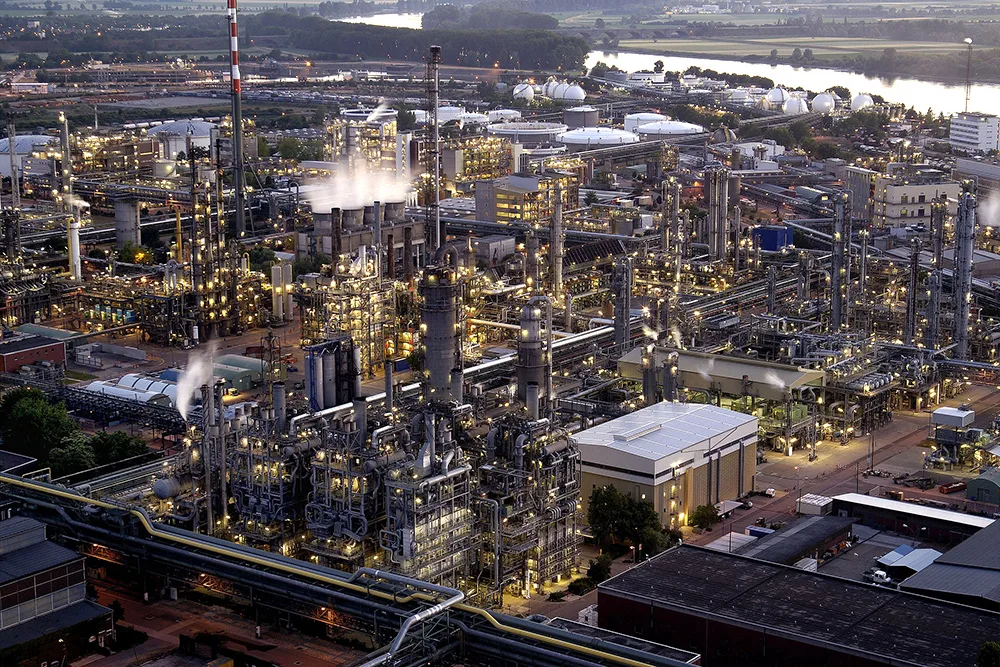
BASF’s Ludwigshafen complex represents the world’s largest integrated chemical production site, demonstrating the scale and complexity of modern chemical manufacturing. With an area of approximately ten square kilometers, the facility serves as both BASF’s headquarters and the birthplace of the Verbund concept.
The Verbund concept intelligently integrates production facilities, energy flows, and logistics. This integration creates efficient value-adding chains from basic chemicals to highly sophisticated products. The backbone of the Ludwigshafen production Verbund comprises a dense network of approximately 200 production plants, connected by over 2,850 kilometers of pipelines and more than 230 kilometers of rail tracks.
The facility’s production capacity is staggering. At BASF’s Ludwigshafen site, approximately 8,000 sales products are produced, with a total volume of 8.5 million metric tons per year, from just a few raw materials, including naphtha, rock salt, and sulfur. The site employs approximately 39,000 people directly through BASF SE, BASF Group companies, and third-party companies.
The facility’s logistics infrastructure complements Verbund’s production. Key components include an intermodal transport terminal handling 300,000 units per year. This modern logistics center processes 100,000 tons of packed chemicals, achieving an eightfold annual throughput, with harbor facilities and block train connections to Antwerp, Rotterdam, Eastern Germany, and the Mediterranean Sea. Additionally, ethylene and propylene pipelines link Ludwigshafen to other key chemical complexes.
The Ludwigshafen complex serves as both a technology platform and the center of corporate research, demonstrating how large-scale chemical manufacturing can integrate production, logistics, and innovation in a single comprehensive facility.

Anheuser-Busch’s Newark brewery opened in 1951 as the company’s second brewery in the United States, marking a significant expansion of its production capacity. For over 67 years, the brewery’s iconic A&Eagle sign has soared over the city of Newark, becoming a recognizable landmark.
The facility represented a significant industrial investment in Newark’s manufacturing sector. Initially based in St. Louis, Missouri, Anheuser-Busch’s expansion into Newark in 1951 marked the beginning of substantial changes in the city’s beer industry. The brewery was strategically positioned to serve the northeastern United States market from this major transportation hub.
The Newark facility produces several of Anheuser-Busch’s core brands, including Budweiser, Bud Light, Busch, Busch Light, and Natural Light. At its peak production, the facility was reportedly capable of producing 10 million barrels of beer per year, underscoring the massive scale of industrial brewing operations.
The Newark brewery has evolved to incorporate modern sustainability practices. The facility now utilizes solar panels and implements recycling programs, including donating spent hops – a practice that has become increasingly common throughout the brewing industry. These environmental initiatives demonstrate how large industrial breweries have adapted to changing expectations for sustainable manufacturing.
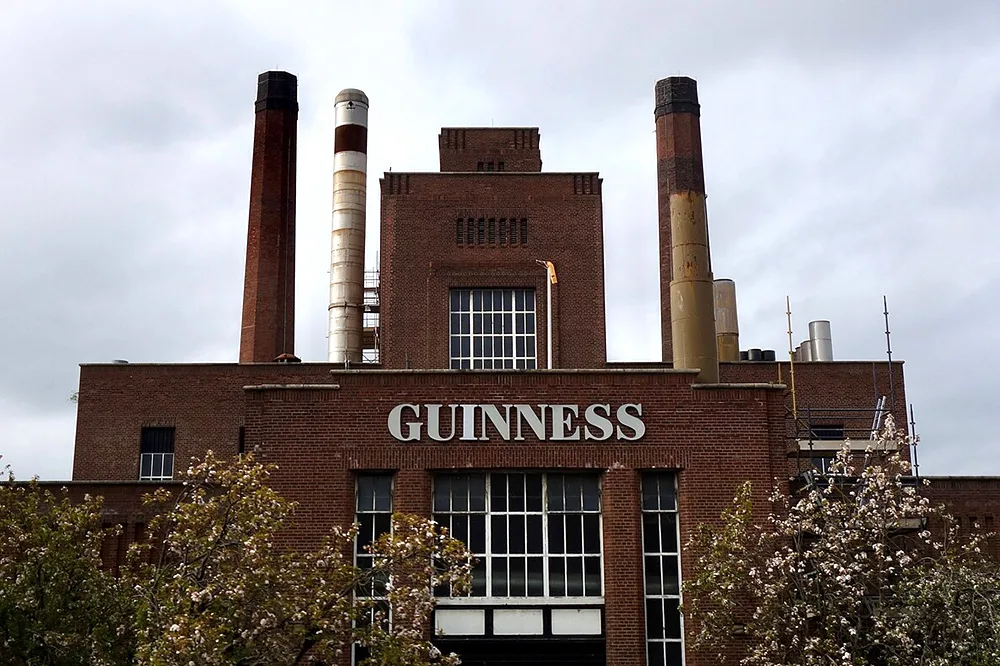
The Guinness Brewery at St. James’s Gate in Dublin represents centuries of brewing tradition combined with architectural and industrial innovation. The brewery complex includes buildings that showcase the evolution of industrial architecture and brewing technology over time.
One of the most significant structures is the reinforced concrete barley flaking plant built between 1935 and 1945. This imposing building employed the Mouchel patent system of reinforced concrete construction, which was introduced to the United Kingdom by L.G. Mouchel and proved popular in the Irish market. The building’s distinctive form features a strikingly modern geometric design with vertical emphasis articulated by bay piers and octagonal-profile silos.
The architectural significance extends beyond functionality. A bowstring arch over the covered loading bay provides visual contrast with the predominantly vertical emphasis of the building. This structure represents important technical and contextual interest as part of Ireland’s industrial heritage, embodying both traditional brewing processes and modern construction techniques.
The brewery’s visitor attraction, the Guinness Storehouse, is housed in a building constructed in 1902 as a fermentation plant. Designed in the style of the Chicago School of Architecture, it was Ireland’s first multi-story steel-framed building. The building was used continuously as the brewery’s fermentation plant until its closure in 1988 when a new fermentation plant was completed near the River Liffey.
The Storehouse conversion, completed in 2000, demonstrates how historic industrial buildings can be successfully adapted for new purposes. The seven-floor facility surrounds a glass atrium shaped like a pint of Guinness, creating an immersive experience that celebrates the brewery’s history while serving modern tourism needs.
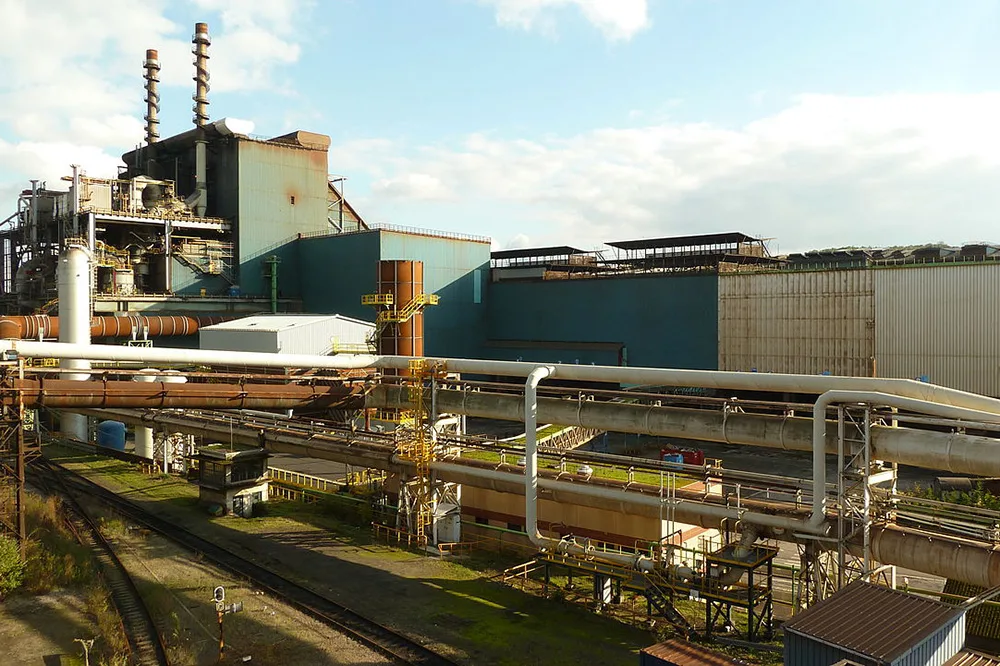
ArcelorMittal operates an extensive global network of steel production facilities across multiple continents. In Europe alone, ArcelorMittal employs 48,544 people and maintains steel-making operations in 8 countries.
The company’s facilities demonstrate the global scale of modern steel production. Major European operations include ArcelorMittal Ghent in Belgium, with additional plants in Geel, Genk, and Liège. The company operates significant facilities in France, including plants in Dunkerque, Desvres, Fos-sur-Mer, Mardyck, Montataire, Basse-Indre, Florange, Mouzon, and Saint-Chély-d’Apcher.
ArcelorMittal’s geographic diversity extends across continents. The company operates major facilities in North America, including Dofasco in Hamilton, Ontario, Canada, and various operations in the United States. The Montreal steel plant in Contrecœur, Quebec, demonstrates the company’s long-standing presence, with operations dating back to 1914 and employing 1,900 people.
The Montreal facility showcases modern steel production technology. The complex comprises two steel plants (ArcelorMittal Contrecoeur East and West), a direct-reduced iron (DRI) plant, a bar mill, a wire rod mill, and a steel recycling center. The facility produces semi-finished and finished rolled products, including wire rods, rebar, wire, and bars, for the automotive, building, and infrastructure sectors.

China Baowu Steel Group represents the massive scale of Chinese industrial production and has become the world’s largest steel producer. The company was formed through the merger of Baosteel Group and Wuhan Iron and Steel Corporation in 2016.
The scale of China Baowu’s operations is remarkable. In 2019, the company achieved 95.47 million tons of steel production, generating $78 billion in revenue and employing 195,434 people. This represents enormous growth from earlier years when the company produced around 35 million tons annually.
The company’s strategic approach involves consolidating China’s fragmented steel industry. The total production capacity of more than 500 steelmakers listed by China’s Ministry of Industry and Information Technology is approximately 800 million tons, with over 1,000 smaller producers scattered across China not included in official directories.
Baowu Steel is mandated to reduce overcapacity and acquire other producers through capital operations to increase market concentration.
The company has established sophisticated financial mechanisms to support industry consolidation. In April 2017, Baowu established a steel industry restructuring fund in conjunction with WL Ross & Co., the US-China Green Fund, and China Merchants Group. The fund, preliminarily set between CNY40 billion and CNY80 billion, helps Chinese steelmakers eliminate overcapacity, clean up ‘zombie enterprises,’ and facilitate business reorganization.
The factories explored in this comprehensive analysis represent more than mere production facilities—they embody humanity’s relentless pursuit of innovation, efficiency, and progress. These manufacturing powerhouses have fundamentally shaped the trajectory of industrial development, creating the foundation upon which modern civilization stands.
Today’s leading factories increasingly incorporate intelligent technologies, sustainable practices, and flexible production systems. Industry 4.0 principles are transforming facility operations, with digital twins, artificial intelligence, and advanced robotics becoming standard features rather than experimental additions.
Real-time data analytics and predictive maintenance have become essential tools for maintaining efficiency and quality. Facilities now operate as interconnected networks, sharing information and coordinating production across vast geographic distances. This integration represents a fundamental shift from traditional isolated manufacturing toward collaborative industrial ecosystems.
Modern manufacturing facilities prioritize environmental responsibility by adopting renewable energy, implementing waste reduction strategies, and embracing the principles of the circular economy. Leading factories demonstrate that industrial production can achieve both economic success and environmental stewardship, setting new standards for sustainable manufacturing practices.
The integration of clean energy systems, advanced material recycling, and pollution elimination technologies shows how manufacturing can contribute positively to environmental goals while maintaining competitive advantages. These developments signal a transformation in how society views the relationship between industrial production and environmental preservation.
The factories featured in this exploration collectively employ millions of people and generate trillions of dollars in economic value. They represent the backbone of the global economy, transforming raw materials into the products that define modern civilization.
These manufacturing powerhouses have driven technological innovation, created employment opportunities, and shaped the development of entire regions. From automotive manufacturing centers to electronics production hubs, these facilities have been catalysts for economic growth and social transformation.
The influence extends far beyond immediate economic impact. These factories have shaped urban development, influenced educational systems, and driven technological advancement across multiple industries. The skills, processes, and innovations developed within these facilities have spread throughout the global economy, raising productivity and living standards worldwide.
The most influential factories offer valuable insights for future manufacturing development. They demonstrate the importance of continuous innovation, quality focus, and adaptability in maintaining a competitive advantage. These facilities demonstrate how manufacturing can strike a balance between economic success and social responsibility, creating value for stakeholders while contributing to broader societal objectives.
The emphasis on worker welfare, architectural excellence, sustainability integration, and technological advancement points toward future manufacturing paradigms that balance productivity with human and environmental considerations. These examples provide both inspiration and practical guidance for developing next-generation manufacturing capabilities.
As we advance into an era of unprecedented technological change, these manufacturing giants continue to evolve, incorporating emerging technologies and adapting to shifting market conditions. The lessons learned from these influential facilities guide the development of advanced manufacturing capabilities, ensuring that the industrial sector continues driving economic growth and human progress.
The story of these revolutionary factories ultimately represents human ingenuity and determination. They embody our ability to transform ideas into reality, scale production to meet global needs, and continuously improve processes and products. As we face new challenges in sustainability, digitalization, and globalization, these facilities provide both inspiration and practical frameworks for building a more advanced industrial future.
These manufacturing powerhouses will continue serving as engines of economic growth and technological advancement, shaping our world in ways we can only begin to imagine. Their influence extends far beyond factory walls, touching every aspect of modern life and driving human progress forward into an increasingly complex and interconnected global economy.