
Senior Editor, Industrial Marketing Solution Expert
The manufacturing landscape is undergoing a profound transformation, unlike anything we’ve witnessed since the first industrial revolution. Industry 4.0 represents more than just technological advancement – it’s a complete reimagining of how we produce, manage, and deliver products in the digital age. At the heart of this revolution lies a fundamental challenge: preparing the manufacturing workforce for a future where digital technologies, artificial intelligence, and human expertise converge to create unprecedented opportunities and complexities.
As we stand at the crossroads of traditional manufacturing and digital innovation, the skills gap has become one of the most pressing challenges facing industry leaders worldwide. The workers who have powered manufacturing for decades now find themselves in an environment where their expertise must be augmented with new digital competencies. This isn’t about replacement – it’s about enhancement, evolution, and empowerment.
The fourth industrial revolution is fundamentally different from its predecessors. While previous revolutions introduced mechanization, electricity, and automation, Industry 4.0 is characterized by the fusion of digital, physical, and biological systems. This convergence creates what experts call cyber-physical systems – intelligent networks of machines, sensors, and software that can monitor, analyze, and optimize manufacturing processes in real-time.
For the manufacturing workforce, this transformation means that traditional skills remain valuable but must be complemented by new digital competencies. A machine operator who once relied primarily on mechanical knowledge now needs to understand data analytics, interpret digital dashboards, and troubleshoot connected systems. A quality inspector must work alongside AI-powered vision systems, understanding both their capabilities and limitations.
The skills required in this new paradigm fall into several key categories. Technical digital skills form the foundation, encompassing everything from basic computer literacy to advanced programming and data analysis. Analytical and problem-solving capabilities become crucial as workers must interpret complex data streams and make decisions based on multiple information sources. Adaptability and continuous learning emerge as the most critical meta-skills, as the pace of technological change means that specific tools and platforms will continue to evolve throughout a worker’s career.
The manufacturing industry faces a paradoxical situation: unemployment rates in many regions remain elevated while manufacturers struggle to find qualified workers. This disconnect stems from the rapidly evolving skill requirements that accompany Industry 4.0 implementation. Traditional manufacturing education and training programs, designed for an earlier industrial era, often fail to address the complex interplay of mechanical, electrical, and digital systems that characterize modern manufacturing.
Research indicates that the most significant gaps exist in areas where traditional manufacturing intersects with digital technologies. Predictive maintenance requires workers to understand both mechanical systems and data analytics. Quality control now involves statistical process control, machine learning algorithms, and digital documentation systems. Supply chain management demands proficiency in enterprise resource planning systems, real-time tracking technologies, and data-driven decision making.
The challenge is compounded by the fact that these skills cannot be developed in isolation. Modern manufacturing roles require what researchers term “hybrid competencies” – the ability to integrate technical knowledge with digital tools and analytical thinking seamlessly. A maintenance technician, for example, must understand hydraulic systems, electrical circuits, sensor technologies, data interpretation, and predictive analytics as interconnected elements of a single role.
Furthermore, the skills gap extends beyond technical competencies to include soft skills that are increasingly important in digitized manufacturing environments. Collaboration takes on new dimensions when teams include both human workers and AI systems. Communication must accommodate digital platforms and data-driven discussions. Leadership requires the ability to guide teams through continuous technological change while maintaining operational excellence.
Addressing the Industry 4.0 skills gap requires a fundamental rethinking of how we approach workforce development. Traditional training models, with their emphasis on one-time skill acquisition, must give way to continuous learning systems that can adapt to rapidly evolving technological requirements. Successful programs share several key characteristics that distinguish them from conventional training approaches.
Integrated learning pathways represent a significant departure from siloed training programs. Instead of teaching digital skills separately from technical competencies, effective programs demonstrate how these elements work together in real manufacturing environments. For instance, a comprehensive program might begin with traditional mechanical principles, then layer on sensor technologies, data collection methods, analytical tools, and finally decision-making frameworks that integrate all these elements.
Hands-on learning environments have proven essential for effective Industry 4.0 training. Virtual reality simulations allow workers to practice complex procedures without risking expensive equipment or production downtime. Augmented reality applications enable real-time learning support, providing contextual information and guidance while workers perform actual tasks. Physical learning laboratories equipped with modern manufacturing technologies give workers direct experience with the tools and systems they’ll encounter in their daily work.
Modular program design addresses the diverse learning needs of modern manufacturing workforces. Some workers may need comprehensive retraining to transition from traditional roles to digitally-enabled positions. Others require specific skill updates to work effectively with new technologies. Modular approaches allow organizations to customize learning pathways based on individual needs, current competencies, and career goals.
Industry partnerships have emerged as a critical success factor in training program development. Manufacturers, technology vendors, educational institutions, and training providers must collaborate to ensure that programs reflect real-world requirements and emerging trends. These partnerships often result in shared training facilities, co-developed curricula, and apprenticeship programs that provide direct pathways from learning to employment.
The technical skill requirements for Industry 4.0 span multiple domains, each requiring specialized knowledge while contributing to an integrated understanding of intelligent manufacturing systems. Data literacy forms the foundation of modern manufacturing competency, as virtually every aspect of Industry 4.0 relies on data collection, analysis, and interpretation.
Workers need to understand different types of data generated by manufacturing processes – from simple sensor readings to complex pattern recognition outputs. They must develop proficiency in data visualization tools that transform raw numbers into actionable insights. Statistical thinking becomes essential as workers learn to distinguish between normal process variation and significant changes that require intervention.
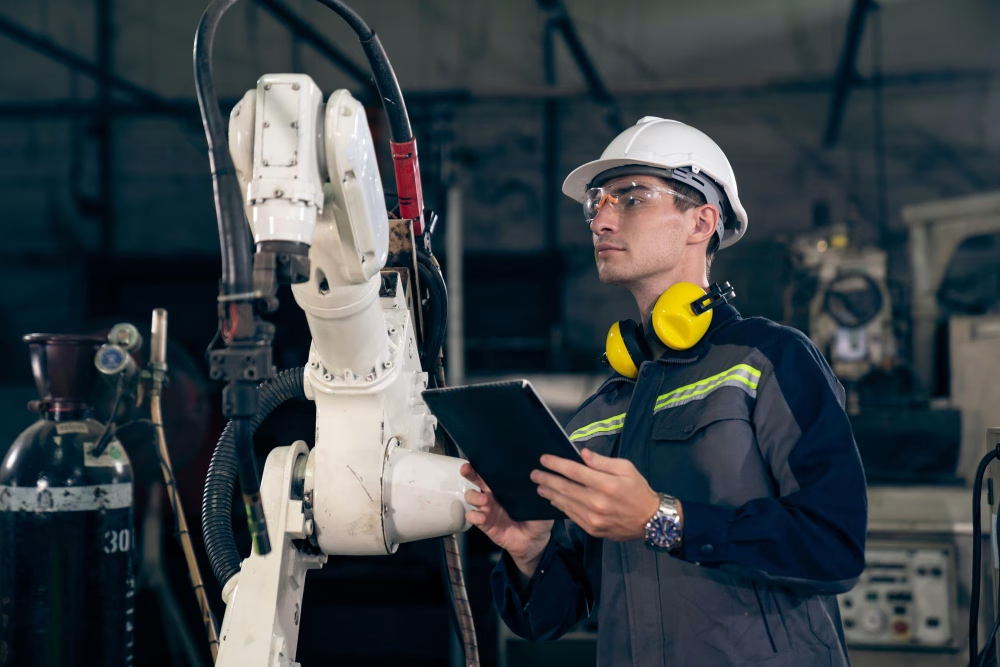
Automation and robotics represent another critical technical domain. Modern manufacturing workers don’t need to become robotics engineers. Still, they must understand how automated systems operate, how to interact with them safely and effectively, and how to troubleshoot common issues. This includes familiarity with human-machine interfaces, understanding of safety protocols for collaborative robots, and basic programming concepts for configuring automated processes.
Cybersecurity awareness has become indispensable as manufacturing systems become increasingly connected. Workers must understand the security implications of their actions, recognize potential threats, and follow protocols that protect both digital systems and physical operations. This includes password management, secure communication practices, and awareness of social engineering tactics that could compromise manufacturing systems.
Internet of Things (IoT) technologies pervade modern manufacturing environments, requiring workers to understand how sensors, networks, and edge computing devices work together to create intelligent systems. This knowledge encompasses sensor types and applications, wireless communication protocols, and edge computing concepts that enable real-time decision making at the point of production.
Additive manufacturing and advanced materials represent emerging technical areas that are reshaping manufacturing processes. Workers need to understand the capabilities and limitations of 3D printing technologies, the properties of new materials, including smart materials and composites, and how these innovations integrate with traditional manufacturing processes.
The transition to Industry 4.0 requires manufacturing workers to become comfortable with digital tools and analytical thinking in ways that previous generations of workers never experienced. Digital competency development must go beyond basic computer literacy to encompass a sophisticated understanding of how digital systems support and enhance manufacturing operations.
Enterprise software proficiency has become essential as manufacturing operations rely increasingly on integrated software systems. Workers must understand how Enterprise Resource Planning (ERP) systems coordinate production schedules, inventory management, and quality control. Manufacturing Execution Systems (MES) require operators who can navigate complex interfaces, interpret real-time data, and make adjustments based on system recommendations.
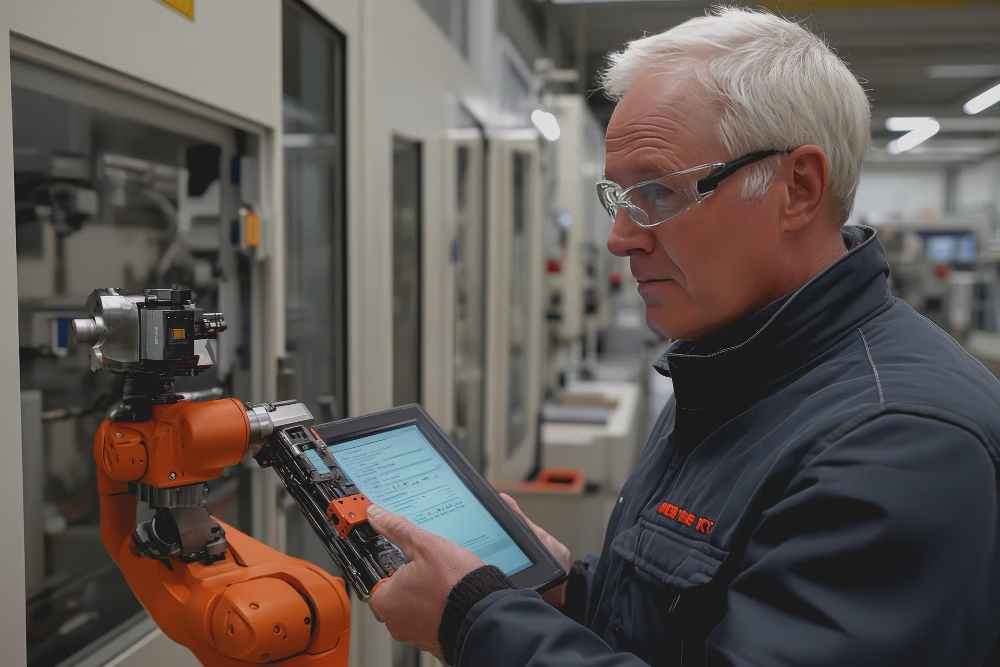
Mobile technology integration reflects the reality that much of Industry 4.0 interaction occurs through smartphones and tablets. Workers use mobile applications to access work instructions, report issues, communicate with team members, and interact with automated systems. Training programs must prepare workers to effectively use these mobile interfaces while maintaining focus on safety and quality requirements.
Cloud computing concepts become relevant as manufacturing data and applications increasingly reside in cloud environments. Workers don’t need to become cloud engineers. Still, they must understand basic concepts of data synchronization, remote access, and the implications of working with systems that span multiple locations and devices.
Data analytics skills represent the most transformative aspect of Industry 4.0 workforce development. Manufacturing generates enormous volumes of data, and the ability to extract meaningful insights from this data distinguishes high-performing organizations from their competitors. Workers at all levels need analytical skills appropriate to their roles and responsibilities.
Descriptive analytics skills enable workers to understand what has happened in manufacturing processes. This includes creating and interpreting charts, graphs, and dashboards that summarize production performance, quality metrics, and equipment status. Workers learn to identify trends, spot anomalies, and communicate findings to colleagues and supervisors.
Diagnostic analytics capabilities allow workers to understand why certain events occurred. This involves correlation analysis, root cause investigation techniques, and the ability to drill down from high-level metrics to specific process variables. These skills prove particularly valuable in quality control and continuous improvement initiatives.
Predictive analytics represents an advanced competency that enables workers to anticipate future events based on historical data and current conditions. While not all workers need deep statistical knowledge, understanding the principles of predictive maintenance, demand forecasting, and quality prediction helps them work more effectively with AI-powered systems.
The human elements of Industry 4.0 transformation often receive less attention than technical requirements, yet they frequently determine the success or failure of digital initiatives. Leadership skills must evolve to address the unique challenges of managing in digitally-enabled manufacturing environments.
Change management capabilities become essential as leaders guide their teams through continuous technological evolution. This includes understanding how people respond to change, communicating the benefits and challenges of new technologies, and creating supportive environments where workers can develop new competencies without fear of failure or job loss.
Data-driven decision making represents a fundamental shift in how manufacturing leaders operate. Traditional approaches based primarily on experience and intuition must be balanced with analytical insights derived from manufacturing data. Leaders need to understand the capabilities and limitations of data analytics while maintaining the judgment and wisdom that comes from deep manufacturing experience.
Cross-functional collaboration takes on new dimensions as Industry 4.0 breaks down traditional silos between departments. Production, quality, maintenance, engineering, and information technology teams must work together more closely than ever before. Leaders must facilitate this collaboration while respecting the specialized expertise that each function brings to manufacturing operations.
Digital communication skills become crucial as teams increasingly rely on digital platforms for coordination and information sharing. This includes effective use of collaboration tools, virtual meeting platforms, and digital documentation systems. Leaders must model effective digital communication while ensuring that important nuances and context are not lost in digital translation.
Emotional intelligence gains importance as workers navigate the stress and uncertainty that often accompany technological change. Leaders must recognize signs of technology-related anxiety, provide appropriate support and encouragement, and create psychological safety that enables learning and innovation.
Successful Industry 4.0 workforce development requires careful planning and systematic implementation. Organizations that achieve the best results typically follow structured approaches that address both immediate training needs and long-term capability development.
Skills assessment provides the foundation for effective training program design. Organizations need a comprehensive understanding of their current workforce capabilities, including technical skills, digital competencies, and learning readiness. This assessment should consider not only current job requirements but also anticipated future needs based on planned technology investments and market developments.
Learning pathway design must balance individual needs with organizational priorities. Some workers may benefit from comprehensive retraining programs that prepare them for significantly different roles. Others may need targeted skill updates that enable them to work more effectively with new technologies. Still others may be ready for advanced training that prepares them for leadership roles in digital manufacturing environments.
Resource allocation requires careful consideration of training methods, technology investments, and time commitments. Traditional classroom instruction may be appropriate for some content, while hands-on laboratory experiences are essential for others. Virtual and augmented reality training can provide safe, cost-effective practice opportunities for complex or dangerous procedures. Online learning platforms enable flexible, self-paced skill development that accommodates production schedules.
Progress tracking and assessment ensure that training investments produce desired outcomes. This includes both formal testing of specific competencies and ongoing evaluation of how well workers apply new skills in their daily work. Feedback mechanisms allow continuous program improvement based on learner experiences and changing organizational needs.
Cultural integration addresses the often-overlooked challenge of helping workers embrace digital technologies as tools that enhance rather than replace their expertise. This includes recognizing and celebrating examples of successful technology adoption, sharing success stories that demonstrate the benefits of new competencies, and creating opportunities for workers to contribute to technology selection and implementation decisions.
Effective Industry 4.0 workforce development programs require robust measurement and continuous improvement processes. Success metrics must go beyond traditional training measures to encompass the real-world application of new competencies and their impact on manufacturing performance.
Competency demonstration represents the most direct measure of training effectiveness. Rather than relying solely on test scores or completion certificates, successful programs evaluate how well workers apply new skills in their actual work environments. This might include performance assessments using real manufacturing data, problem-solving scenarios that require integration of multiple competencies, or peer evaluations that reflect collaborative working relationships.
Production performance indicators provide crucial feedback on the business impact of workforce development investments. Organizations track metrics such as equipment effectiveness, quality performance, safety incidents, and production flexibility to understand how improved worker capabilities translate into operational improvements. These measures help justify continued investment in training programs and identify areas where additional development may be needed.
Employee engagement and retention serve as important indicators of program success. Workers who feel confident in their ability to work effectively with new technologies are more likely to remain engaged and committed to their organizations. Retention rates, internal promotion patterns, and employee satisfaction surveys provide insights into how well training programs are meeting worker needs and career aspirations.
Innovation and continuous improvement contributions reflect the higher-order thinking skills that effective Industry 4.0 training should develop. Workers who understand both traditional manufacturing principles and digital technologies are uniquely positioned to identify opportunities for improvement and contribute to innovation initiatives. Tracking these contributions helps organizations understand the full value of their workforce development investments.
Adaptation to new technologies demonstrates the meta-learning capabilities that are essential for long-term success in rapidly evolving manufacturing environments. Programs that develop strong foundational competencies and learning skills enable workers to adapt more quickly to new technologies and processes. Organizations can measure this adaptability by tracking how quickly workers become proficient with new systems and how effectively they transfer learning from one context to another.
The complexity and rapid evolution of Industry 4.0 technologies make it virtually impossible for any single organization to develop and maintain comprehensive training programs independently. Industry-education partnerships have emerged as essential mechanisms for creating effective, sustainable workforce development ecosystems.
Curriculum co-development ensures that training programs reflect current industry needs and emerging technology trends. Manufacturing companies bring real-world experience and specific skill requirements, while educational institutions contribute pedagogical expertise and research capabilities. This collaboration results in training programs that are both technically accurate and educationally effective.
Shared training facilities enable organizations to provide hands-on experience with expensive, sophisticated equipment that might be cost-prohibitive for individual companies or schools to purchase independently. These facilities often feature the latest manufacturing technologies and provide realistic training environments that prepare workers for modern manufacturing settings.
Faculty development programs address the challenge of keeping instructors current with rapidly evolving industry practices. Manufacturing companies provide opportunities for educators to gain direct experience with new technologies and processes, while educators share pedagogical approaches that enhance industry training programs. This bidirectional knowledge transfer strengthens both educational institutions and manufacturing organizations.
Apprenticeship and internship programs create direct pathways from education to employment while providing students with real-world experience and employers with access to emerging talent. These programs often combine classroom learning with hands-on work experience, allowing participants to develop both technical competencies and workplace skills.
Research collaboration enables the development of innovative training methods and technologies that benefit the entire industry. Joint research projects might explore new applications of virtual reality in training, develop assessment tools for Industry 4.0 competencies, or investigate effective approaches for retraining experienced workers.
Industry 4.0 workforce development benefits significantly from the same technologies that are transforming manufacturing operations. Training technology applications enhance learning effectiveness while reducing costs and increasing accessibility.
Virtual reality (VR) training environments provide safe, controlled settings where workers can practice complex procedures without risking equipment damage or safety incidents. VR simulations can replicate expensive manufacturing equipment, dangerous scenarios, or rare failure modes that would be difficult or impossible to recreate in traditional training settings. These environments enable repetitive practice that builds confidence and competency.
Augmented reality (AR) applications support real-time learning by overlaying digital information onto physical manufacturing environments. Workers can access work instructions, safety reminders, or diagnostic information while performing actual tasks. AR training applications help bridge the gap between classroom learning and workplace application by providing contextual support when and where it’s needed.
Artificial intelligence (AI) tutoring systems personalize learning experiences based on individual progress and learning preferences. These systems can identify knowledge gaps, recommend specific learning activities, and adjust difficulty levels to maintain appropriate challenge without overwhelming learners. AI tutoring is particularly valuable for self-paced learning programs that accommodate diverse schedules and learning speeds.
Mobile learning platforms enable flexible, just-in-time skill development that fits into busy work schedules. Workers can access training content during breaks, commute time, or other available moments. Mobile platforms are especially effective for delivering bite-sized learning modules that address specific skills or knowledge areas.
Gamification elements increase engagement and motivation by incorporating game-like features into training programs. Points, badges, leaderboards, and challenges can make learning more enjoyable while encouraging completion and retention. Gamification is particularly effective for technical training that might otherwise seem dry or abstract.
The rapid pace of technological change in Industry 4.0 makes continuous learning not just beneficial but essential for manufacturing organizations and their workers. Learning culture development requires deliberate effort to create environments where skill development is valued, supported, and integrated into daily work practices.
Leadership commitment provides the foundation for effective learning cultures. When leaders actively participate in learning initiatives, allocate resources for training, and recognize learning achievements, they send clear messages about organizational priorities. This commitment must extend beyond initial technology implementations to encompass ongoing skill development as technologies continue to evolve.
Learning time allocation addresses one of the most common barriers to effective workforce development. Organizations must find ways to provide workers with dedicated time for learning activities without compromising production requirements. This might include scheduled training time, job rotation programs that provide learning opportunities, or flexible scheduling that accommodates different learning preferences.
Peer learning networks leverage the collective knowledge and experience of the workforce. Experienced workers can mentor colleagues who are developing new competencies, while workers who quickly master new technologies can share their knowledge with others. These networks create supportive learning environments and help distribute knowledge throughout the organization.
Innovation encouragement creates opportunities for workers to apply new skills in creative ways. When workers are encouraged to experiment with new approaches, suggest improvements, or participate in innovation projects, they develop a deeper understanding and greater confidence in their capabilities. This experimentation also provides valuable feedback on the effectiveness of training programs.
Recognition and advancement systems must evolve to value continuous learning and digital competencies. Career advancement opportunities should reflect Industry 4.0 skills alongside traditional manufacturing expertise. Recognition programs can celebrate learning achievements and the successful application of new competencies in workplace situations.
As Industry 4.0 continues to evolve, workforce development strategies must anticipate future skill requirements while building strong foundational competencies that remain relevant across technological changes. Future-proofing approaches focus on developing adaptable workers who can thrive in continuously changing environments.
Meta-learning skills enable workers to learn how to learn more effectively. These skills include understanding different learning styles, developing effective study strategies, and building confidence in the ability to master new competencies. Workers with strong meta-learning skills can adapt more quickly to new technologies and processes throughout their careers.
Systems thinking capabilities help workers understand how individual components and processes fit into larger manufacturing systems. This understanding becomes increasingly important as Industry 4.0 technologies create more complex, interconnected manufacturing environments. Workers who can see the big picture are better equipped to make decisions that optimize overall system performance.
Entrepreneurial mindsets prepare workers to identify opportunities for improvement and innovation. As manufacturing becomes more flexible and responsive to customer needs, workers at all levels must think creatively about how to solve problems and create value. Entrepreneurial skills include opportunity recognition, creative problem-solving, and risk assessment.
Global awareness reflects the increasingly international nature of modern manufacturing. Workers need to understand different cultural approaches to work and communication, regulatory requirements in different markets, and the implications of global supply chains. This awareness helps them work effectively in multinational organizations and contribute to global competitiveness.
Ethical reasoning becomes important as artificial intelligence and automated decision-making systems become more prevalent in manufacturing. Workers need to understand the ethical implications of technological choices and be prepared to make decisions that balance efficiency, safety, quality, and social responsibility.
The transformation to Industry 4.0 represents both the greatest challenge and the most significant opportunity facing the manufacturing workforce today. Success requires more than just learning new technologies – it demands a fundamental shift in how we think about work, learning, and career development in manufacturing environments.
Organizations that invest thoughtfully in comprehensive workforce development programs will build competitive advantages that extend far beyond technology implementation. They will create workforces that are not only capable of operating in today’s digital manufacturing environments but are also prepared to continue learning and adapting as technologies continue to evolve.
The path forward requires collaboration among manufacturers, educational institutions, technology providers, and policymakers. Together, these stakeholders must create learning ecosystems that provide workers with the skills, confidence, and support they need to thrive in the digital future of manufacturing. The workers who power today’s manufacturing operations have the potential to become the leaders and innovators who will define Industry 4.0’s impact on global competitiveness and economic prosperity.
The future of manufacturing depends not on choosing between human workers and digital technologies, but on creating powerful partnerships between human intelligence and artificial intelligence, traditional expertise and digital capabilities, individual skills and collaborative networks. This future is within reach for organizations willing to invest in their people and commit to the continuous learning journey that Industry 4.0 demands.