The Modern Supply Chain:

Navigating Complexity, Innovation, and the Future of Global Commerce

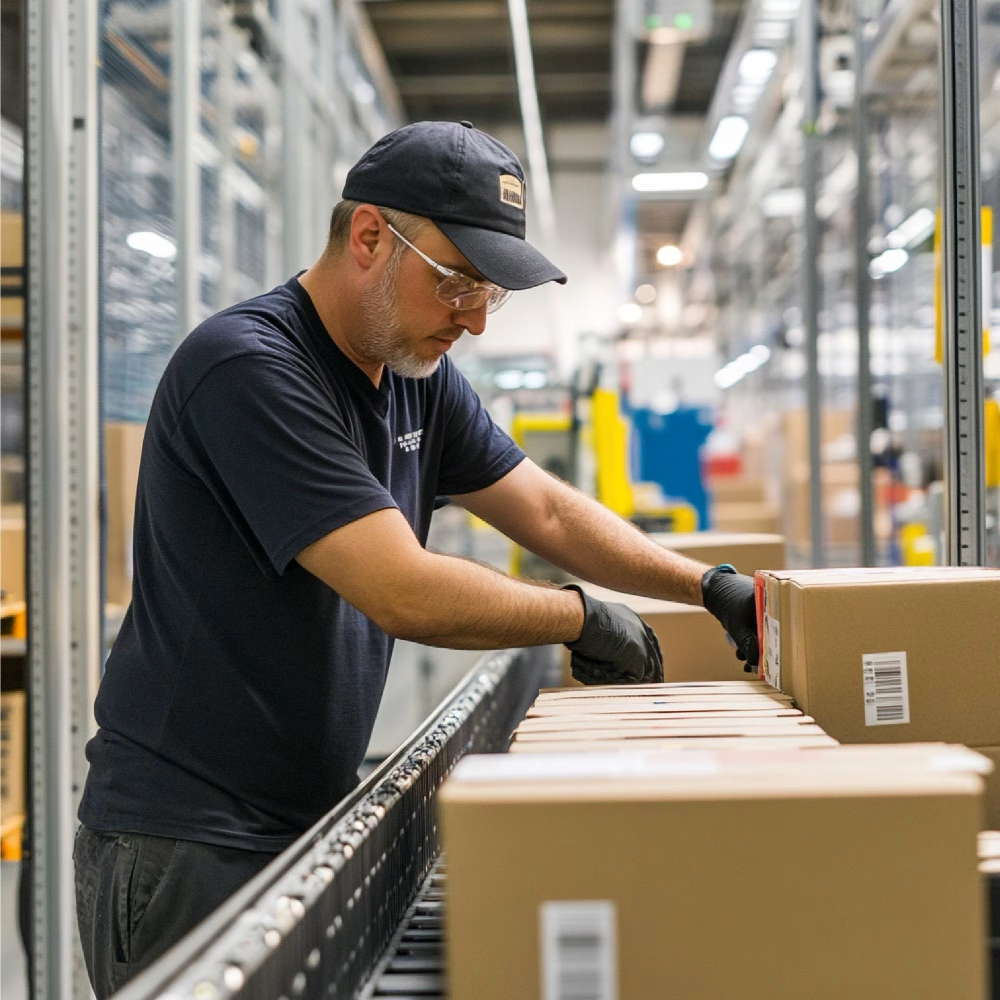
Inside Micro-Fulfillment Center
Picture of John Belmort
John Belmort

Supply Chain Expert

The retail landscape has undergone a seismic shift in recent years, driven by evolving consumer expectations and technological advancements. As shoppers increasingly demand faster delivery times and seamless omnichannel experiences, traditional distribution models are being challenged like never before. Enter Micro-Fulfillment Centers (MFCs) – a revolutionary approach to inventory management and order fulfillment that’s transforming how businesses think about getting products to customers.

These compact, automated facilities represent a paradigm shift from the massive warehouse model that has dominated e-commerce for decades. By bringing inventory closer to consumers and leveraging cutting-edge automation technologies, Micro-Fulfillment Centers are enabling retailers to meet the growing demand for same-day and next-day delivery while maintaining operational efficiency and cost-effectiveness.

The Evolution of Fulfillment: From Mega-Warehouses to Micro-Solutions

For years, the fulfillment industry has operated under the assumption that bigger is better. Massive distribution centers spanning millions of square feet have become the gold standard, with companies like Amazon leading the charge in building enormous facilities that can serve entire regions. These mega-warehouses offered economies of scale and could house vast inventories, but they also came with significant limitations.

The traditional model required products to travel hundreds or even thousands of miles from distribution centers to consumers, resulting in longer delivery times and higher transportation costs. As consumer expectations shifted toward instant gratification and same-day delivery, the cracks in this system became increasingly apparent.

The rise of urban e-commerce presented additional challenges. Dense metropolitan areas, where a significant portion of online orders originate, often lack the space and infrastructure to support large-scale distribution facilities. High real estate costs, zoning restrictions, and traffic congestion made it increasingly difficult to establish traditional fulfillment operations in these crucial markets.

Micro-Fulfillment Centers emerged as a solution to these challenges, offering a more agile and localized approach to inventory management. Unlike their massive counterparts, these facilities typically range from 3,000 to 20,000 square feet and can be strategically placed in urban and suburban locations closer to end consumers.

Understanding Micro-Fulfillment Centers: Size, Scope, and Strategy

Micro-Fulfillment Centers represent a fundamental reimagining of the fulfillment process. These compact facilities combine advanced automation technologies with strategic location placement to create highly efficient distribution nodes that can serve local markets with unprecedented speed and accuracy.

The typical MFC operates on a fraction of the footprint of traditional warehouses while maintaining impressive throughput capabilities. Through the use of robotic systems, artificial intelligence, and sophisticated inventory management software, these facilities can process hundreds or even thousands of orders per hour with minimal human intervention.

Key Characteristics of Modern MFCs

  • Compact Footprint: Most Micro-Fulfillment Centers occupy between 5,000 and 15,000 square feet, making them suitable for integration into existing retail spaces, urban warehouses, or purpose-built facilities in densely populated areas.
  • High Automation Levels: Advanced robotics systems handle the majority of picking, packing, and sorting operations, reducing labor costs and improving accuracy rates to over 99.5% in many cases.
  • Rapid Deployment: Unlike traditional distribution centers that can take years to plan and build, MFCs can often be deployed in a matter of months, allowing retailers to quickly adapt to changing market conditions.
  • Scalable Design: The modular nature of most MFC systems allows for easy expansion or reconfiguration as demand patterns evolve, providing flexibility that traditional warehouses cannot match.
  • Technology Integration: Sophisticated software platforms coordinate inventory management, order processing, and robotic operations, creating seamless workflows that maximize efficiency.

The Technology Driving the Micro-Fulfillment Revolution

The success of Micro-Fulfillment Centers relies heavily on technological innovations that have matured significantly over the past decade. These systems represent the convergence of robotics, artificial intelligence, machine learning, and advanced logistics software.

  • Robotic Automation Systems
  • At the heart of most MFCs are sophisticated robotic systems designed to handle the picking and packing of customer orders. These systems typically fall into several categories:
  • Goods-to-Person Robots: These automated systems bring inventory to human workers or robotic picking stations, eliminating the time spent walking through aisles and significantly increasing picking speeds. Popular implementations include shelf-moving robots that can navigate warehouse floors autonomously.
  • Autonomous Mobile Robots (AMRs): These intelligent machines can navigate complex warehouse environments, avoiding obstacles and coordinating with other robots to optimize workflow efficiency.
  • Robotic Picking Arms: Advanced manipulator systems equipped with computer vision and machine learning capabilities can identify, grasp, and move a wide variety of products with increasing precision and speed.
  • Automated Storage and Retrieval Systems (AS/RS): These dense storage solutions maximize space utilization while providing rapid access to inventory items through computerized control systems.

Artificial Intelligence and Machine Learning

The software systems that coordinate MFC operations rely heavily on AI and machine learning algorithms to optimize performance.

  • Predictive Analytics: Advanced algorithms analyze historical data, seasonal trends, and external factors to forecast demand and optimize inventory placement within the facility.
  • Dynamic Routing: AI systems continuously optimize robot movements and task assignments to minimize travel time and maximize throughput.
  • Quality Control: Computer vision systems powered by machine learning can identify defects, verify product selection accuracy, and ensure proper packaging.
  • Inventory Optimization: Intelligent systems determine optimal stock levels for each product, balancing availability with storage costs and expiration concerns.

Integration with Existing Systems

Modern Micro-Fulfillment Centers are designed to integrate seamlessly with existing retail infrastructure:

  • Warehouse Management Systems (WMS): Advanced WMS platforms coordinate all aspects of MFC operations, from receiving and put-away to picking and shipping.
  • Enterprise Resource Planning (ERP): Integration with broader ERP systems ensures accurate inventory tracking and financial reporting across all business operations.
  • E-commerce Platforms: Direct integration with online shopping platforms enables real-time inventory updates and automated order processing.
  • Point-of-Sale Systems: For retailers operating both physical and digital channels, MFCs can support in-store pickup, buy-online-pickup-in-store (BOPIS), and ship-from-store operations.

Strategic Advantages: Why Retailers Are Embracing MFCs

The adoption of Micro-Fulfillment Centers offers retailers numerous strategic advantages that extend beyond simple operational improvements. These benefits are driving widespread interest across various industry segments.

Proximity to Customers

The most obvious advantage of MFCs is their ability to position inventory closer to end consumers. This proximity enables:

  • Faster Delivery Times: Orders can be fulfilled and delivered within hours rather than days, meeting growing consumer expectations for instant gratification.
  • Reduced Shipping Costs: Shorter distances between fulfillment centers and customers translate to lower last-mile delivery expenses, which often represent the most expensive portion of the shipping process.
  • Improved Service Reliability: Shorter supply chains are less susceptible to disruptions, weather delays, and other factors that can impact customer satisfaction.
  • Enhanced Agility: Local facilities can respond more quickly to fluctuations in demand and seasonal variations in specific markets.

Operational Efficiency Gains

The automation technologies employed in MFCs deliver significant operational benefits:

  • Higher Accuracy Rates: Robotic systems consistently achieve accuracy rates above 99%, reducing costly returns and customer service issues.
  • Improved Labor Productivity: Automation handles repetitive tasks, allowing human workers to focus on higher-value activities and exception handling.
  • 24/7 Operations: Automated systems can operate continuously without breaks, maximizing facility utilization and enabling round-the-clock order processing.
  • Scalable Throughput: MFC systems can handle volume fluctuations more effectively than traditional operations, scaling up during peak periods without proportional increases in labor costs.

Real Estate Flexibility

The compact footprint of MFCs opens new possibilities for facility placement:

  • Urban Integration: MFCs can be established in urban areas where traditional warehouses would be cost-prohibitive or impossible to build.
  • Retail Integration: Many MFCs can be seamlessly integrated into existing retail locations, creating hybrid facilities that cater to both in-store and online customers.
  • Lower Capital Requirements: Smaller facilities require less upfront investment in real estate and infrastructure compared to traditional distribution centers.
  • Reduced Risk: The modular nature of MFC investments allows retailers to test new markets with lower financial exposure.

Industry Applications: Where MFCs Are Making the Biggest Impact

Micro-Fulfillment Centers are finding applications across a wide range of industries, each leveraging the technology to address specific operational challenges and customer needs.

Grocery and Fresh Foods

The grocery sector has been among the early adopters of MFC technology, driven by the unique challenges of handling perishable products and meeting consumer demand for fresh food delivery.

  • Temperature-Controlled Environments: Modern MFCs can maintain multiple temperature zones, ensuring optimal storage conditions for fresh produce, dairy products, frozen foods, and shelf-stable items within the same facility.
  • Inventory Rotation Management: Automated systems excel at managing first-in, first-out (FIFO) inventory rotation, a crucial process for maintaining product freshness and minimizing waste.
  • Rapid Order Assembly: The ability to quickly assemble grocery orders containing dozens of items from multiple categories makes MFCs particularly valuable for online grocery fulfillment.
  • Local Market Adaptation: Grocery preferences vary significantly by region and demographic, making the local focus of MFCs ideal for stocking products that reflect community preferences.

Pharmacy and Healthcare

The healthcare sector has adopted MFCs for their ability to manage specialized inventory requirements and maintain stringent accuracy standards.

  • Regulatory Compliance: Automated systems can maintain detailed tracking and documentation required for pharmaceutical products, ensuring compliance with FDA and other regulatory requirements.
  • Prescription Fulfillment: High accuracy rates and rapid processing capabilities make MFCs ideal for prescription fulfillment, where errors can have serious consequences.
  • Specialized Storage: Climate-controlled environments and secure access controls protect sensitive medications and medical supplies.
  • Emergency Response: Local facilities can provide rapid response capabilities for urgent medical needs and emergencies.

Apparel and Fashion

Fashion retailers are leveraging MFCs to address the unique challenges of managing seasonal inventory, accommodating size variations, and responding to rapidly changing consumer preferences.

  • Style and Trend Responsiveness: Local facilities can quickly adjust inventory to reflect regional fashion preferences and emerging trends.
  • Size and Color Management: Automated systems excel at managing the complex SKU variations common in apparel retail.
  • Returns Processing: MFCs can efficiently handle the high return rates typical in online fashion retail, quickly processing returns and making items available for resale.
  • Seasonal Flexibility: The scalable nature of MFC operations enables fashion retailers to adjust capacity in response to seasonal demand fluctuations.

Electronics and Consumer Goods

Technology retailers and consumer goods companies are utilizing MFCs to support their omnichannel strategies and meet the demand for the rapid delivery of high-value items.

  • Security Considerations: Automated facilities can provide enhanced security for high-value electronics and consumer goods.
  • Technical Support Integration: MFCs can be designed to support product customization, configuration, and technical support services.
  • Warranty and Service Support: Local facilities can provide rapid replacement and repair services, improving customer satisfaction.
  • Product Launch Support: MFCs can quickly stock and distribute new product launches to local markets.
Micro-Fulfillment Center employees

The Economics of Micro-Fulfillment: Cost-Benefit Analysis

Understanding the financial implications of Micro-Fulfillment Centers requires a comprehensive analysis of both upfront investments and ongoing operational considerations.

Capital Investment Requirements

The initial investment in MFC infrastructure varies significantly based on size, automation level, and specific requirements:

  • Facility Costs: Real estate expenses for MFCs are generally lower than those for traditional warehouses due to their smaller footprint; however, urban locations may command premium rents.
  • Automation Equipment: Robotic systems and automated storage equipment represent the largest capital expense, typically ranging from $1 million to $5 million depending on facility size and sophistication.
  • Software Systems: Advanced WMS, inventory management, and control systems require significant upfront licensing and implementation costs.
  • Integration Expenses: Connecting MFC systems with existing retail infrastructure often requires custom development and integration work.

Operational Cost Considerations

Once operational, MFCs typically demonstrate favorable cost structures compared to traditional fulfillment methods:

  • Labor Costs: While MFCs require skilled technicians to maintain their automated systems, overall labor requirements are typically 50-70% lower than those of traditional warehouses.
  • Utility Expenses: Compact facilities with efficient automation systems often demonstrate lower energy consumption per order processed.
  • Transportation Costs: Reduced last-mile delivery distances can significantly lower shipping expenses, particularly for same-day and next-day delivery services.
  • Inventory Carrying Costs: Improved inventory turnover and reduced waste can offset higher per-square-foot storage costs in urban locations.

Return on Investment Metrics

Retailers implementing MFC strategies typically evaluate success using several key metrics:

  • Order Fulfillment Speed: Reduction in order processing and delivery times, often measured in hours rather than days.
  • Cost per Order: Total fulfillment cost including labor, packaging, and shipping expenses divided by number of orders processed.
  • Accuracy Rates: Percentage of orders fulfilled without errors, typically improving from 97-98% to over 99.5% with automation.
  • Customer Satisfaction: Improvements in delivery speed and order accuracy typically result in higher customer satisfaction scores and increased repeat purchase rates.
  • Market Penetration: Ability to serve previously underserved markets or compete more effectively against local competitors.

Challenges and Limitations: Navigating the Complexities

While Micro-Fulfillment Centers offer significant advantages, their implementation is not without challenges. Understanding these limitations is crucial for retailers considering MFC investments.

Technology Complexity

The sophisticated technology that powers MFCs can present significant challenges:

  • System Integration Complexity: Connecting automated systems with existing retail infrastructure often proves more complex and time-consuming than anticipated.
  • Maintenance Requirements: Robotic systems require specialized maintenance and technical expertise that may not be readily available in all markets.
  • Software Dependencies: Heavy reliance on sophisticated software systems creates potential points of failure that can disrupt operations.
  • Upgrade Considerations: Rapidly evolving technology may require frequent upgrades to maintain competitive performance.

Operational Limitations

MFCs face several operational constraints that retailers must carefully consider:

  • Product Mix Limitations: Not all products are suitable for automated handling, particularly items with irregular shapes, fragile packaging, or specialized storage requirements.
  • Volume Thresholds: MFCs require sufficient order volume to justify their capital investment and operational complexity.
  • Scalability Constraints: While MFC systems are scalable, rapid volume growth may necessitate the addition of new facilities rather than simply expanding existing operations.
  • Geographic Coverage: Serving large geographic areas may require multiple MFC locations, increasing complexity and investment requirements.

Economic Considerations

The financial aspects of MFC implementation present several challenges:

  • High Upfront Costs: Significant capital investment requirements can be prohibitive for smaller retailers or those with limited financial resources.
  • Uncertain ROI Timelines: The payback periods for MFC investments can vary significantly, depending on market conditions and the success of implementation.
  • Market Size Requirements: MFCs require sufficient local market density to achieve economic viability.
  • Competitive Pressures: The success of MFC investments may depend on competitive responses and market dynamics beyond the retailer’s control.

Workforce Implications

The transition to automated fulfillment systems raises important workforce considerations:

  • Job Displacement: Automation may eliminate traditional warehouse jobs, though it typically creates new technical positions.
  • Skill Requirements: MFC operations require workers with different skill sets, potentially necessitating significant retraining programs.
  • Labor Relations: Workforce transitions must be carefully managed to maintain employee morale and prevent labor disputes.
  • Geographic Impact: Job displacement in traditional distribution centers may not be offset by job creation in MFC locations.

Global Perspectives: MFC Adoption Around the World

The development and adoption of Micro-Fulfillment Centers vary significantly across different global markets, reflecting local economic conditions, consumer behaviors, and regulatory environments.

North American Market Leadership

The United States has emerged as a leading market for MFC adoption, driven by competitive pressure in e-commerce and consumer expectations for rapid delivery.

  • Retail Innovation: Major retailers have invested heavily in MFC technology to compete with dominant e-commerce players and meet consumer expectations.
  • Urban Market Focus: Dense metropolitan areas, such as New York, Los Angeles, and Chicago, have become testing grounds for the implementation of MFC.
  • Technology Development: Many leading MFC technology providers are based in North America, accelerating adoption and innovation.
  • Regulatory Environment: Relatively permissive zoning and business regulations have facilitated MFC deployment in many markets.

European Market Development

European markets have approached MFC adoption with a focus on sustainability and integration with existing retail infrastructure:

  • Sustainability Focus: European implementations often prioritize energy efficiency and reducing environmental impact.
  • Urban Planning Integration: MFC development is often coordinated with broader urban planning initiatives and transportation systems.
  • Regulatory Compliance: Stricter labor and environmental regulations influence MFC design and operation.
  • Market Fragmentation: Diverse languages, currencies, and regulations across European markets create additional complexity for MFC deployment.

Asian Market Innovation

Asian markets, particularly in China and Japan, have demonstrated unique approaches to MFC implementation:

  • High-Density Urban Markets: Extremely dense urban populations create ideal conditions for MFC deployment and rapid ROI achievement.
  • Technology Integration: Advanced mobile payment systems and digital consumer behaviors support sophisticated MFC operations.
  • Government Support: Some markets have received government support for the development of automation and technology.
  • Rapid Scaling: Asian markets have demonstrated the ability to rapidly scale MFC networks across multiple cities and regions.

Emerging Market Opportunities

Developing markets present both opportunities and challenges for MFC adoption:

  • Leapfrog Potential: Markets without extensive traditional retail infrastructure may be able to adopt advanced fulfillment technologies more rapidly.
  • Infrastructure Constraints: The limited transportation and telecommunications infrastructure may constrain the effectiveness of MFC.
  • Economic Considerations: Lower labor costs may reduce the economic advantages of automation in some markets.
  • Regulatory Uncertainty: Evolving regulatory frameworks may create uncertainty for MFC investments.
People working in Micro-Fulfillment Center

Future Trends: The Evolution of Micro-Fulfillment Technology

The Micro-Fulfillment Centers industry continues to evolve rapidly, with several key trends shaping its future development and capabilities.

Artificial Intelligence Advancement

The integration of increasingly sophisticated AI capabilities will continue to enhance the performance of MFC.

  • Predictive Demand Planning: Advanced machine learning algorithms will improve demand forecasting accuracy, reducing inventory waste and stockouts.
  • Dynamic Optimization: Real-time AI optimization will continuously adjust operations for maximum efficiency based on current conditions.
  • Autonomous Operations: Fully autonomous MFC operations with minimal human intervention are becoming increasingly feasible.
  • Intelligent Maintenance: Predictive maintenance systems will reduce downtime and extend equipment life through AI-powered monitoring and analysis.

Robotics Evolution

Continued advancement in robotics technology will expand MFC capabilities and efficiency.

  • Improved Dexterity: Next-generation robotic systems will handle an increasingly diverse range of products, including fragile and irregular items.
  • Enhanced Speed: Faster robotic systems will increase throughput while maintaining accuracy standards.
  • Collaborative Robotics: Advanced human-robot collaboration will optimize the benefits of both automated systems and human workers, enhancing the overall productivity of both.
  • Modular Robotics: Flexible robotic systems that can be easily reconfigured for different products and seasons.

Sustainability Integration

Environmental considerations are becoming increasingly important in MFC design and operation:

  • Energy Efficiency: Advanced systems will minimize energy consumption through improved automation and facility design.
  • Packaging Optimization: AI-driven packaging systems will reduce waste and optimize shipping configurations for more efficient logistics.
  • Carbon Footprint Reduction: Local fulfillment networks will continue to reduce transportation-related emissions.
  • Circular Economy Integration: MFCs will increasingly support reverse logistics and recycling operations.

Expansion into New Sectors

MFC technology will continue to find applications in new industries and use cases:

  • B2B Fulfillment: Business-to-business applications will leverage MFC technology for rapid commercial delivery.
  • Healthcare Expansion: Specialized medical and pharmaceutical applications will drive the adoption of MFC in healthcare markets.
  • Manufacturing Support: MFCs will support just-in-time manufacturing by delivering parts and materials rapidly.
  • Government Applications: Public sector applications for emergency supplies and government services.

Implementation Strategies: Building Successful MFC Operations

Successfully implementing Micro-Fulfillment Centers requires careful planning, strategic decision-making, and attention to numerous operational details.

Site Selection and Planning

Choosing the right location for MFC operations is crucial for success:

  • Market Analysis: Comprehensive analysis of local demand patterns, competition, and demographic trends.
  • Transportation Access: Proximity to major transportation arteries and delivery routes.
  • Utility Infrastructure: Adequate electrical power, internet connectivity, and other utilities to support automated operations.
  • Zoning and Regulatory Compliance: Ensuring all local regulations and zoning requirements are met.
  • Future Expansion Potential: Considering potential for facility expansion or additional locations as demand grows.

Technology Selection and Integration

Choosing the right technology platform is critical for MFC success:

  • Vendor Evaluation: Comprehensive assessment of available automation providers and their capabilities.
  • Scalability Considerations: Ensuring the chosen systems can grow with the business’s needs.
  • Integration Requirements: Planning for integration with existing retail and e-commerce systems.
  • Support and Maintenance: Evaluating vendor support capabilities and local service availability.
  • Total Cost of Ownership: Considering all costs including purchase, installation, training, and ongoing maintenance.

Operational Optimization

Maximizing MFC performance requires ongoing attention to operational details:

  • Inventory Planning: Optimizing product selection and stocking levels for local market conditions.
  • Workflow Design: Creating efficient processes that maximize automation benefits while maintaining flexibility.
  • Quality Control Systems: Implementing comprehensive quality assurance processes to maintain accuracy standards.
  • Performance Monitoring: Establishing metrics and monitoring systems to track and improve performance.
  • Continuous Improvement: Creating culture and processes for ongoing optimization and enhancement.

Workforce Development

Successfully transitioning to automated fulfillment requires careful workforce planning:

  • Skills Assessment: Understanding current workforce capabilities and identifying training needs.
  • Retraining Programs: Developing comprehensive programs to prepare workers for new roles in automated facilities.
  • Recruitment Strategy: Attracting workers with technical skills needed for MFC operations.
  • Change Management: Managing organizational culture changes associated with increased automation.
  • Safety Training: Ensuring worker safety in environments with robotic systems and automated equipment.

The Road Ahead: Future of Distribution Networks

As Micro-Fulfillment Centers continue to mature and evolve, they are fundamentally reshaping how businesses think about distribution networks and customer service. The technology represents more than just an operational improvement – it’s enabling entirely new business models and customer experiences.

Network Effects and Ecosystem Development

The future of MFCs lies not in individual facilities but in interconnected networks that can respond dynamically to changing demand patterns. These networks will feature:

  • Dynamic Load Balancing: Orders are automatically routed to the optimal fulfillment locations based on inventory availability, delivery requirements, and operational capacity.
  • Inventory Sharing: Multiple MFCs will share inventory visibility and can redistribute products based on local demand patterns.
  • Demand Prediction: Network-wide data will enable more accurate demand forecasting and proactive inventory positioning.
  • Service Integration: MFCs will integrate with broader service networks including repair facilities, return processing centers, and customer service operations.

Technology Convergence

The future will see continued convergence of multiple technologies within MFC operations:

  • Internet of Things (IoT): Comprehensive sensor networks will provide real-time visibility into all aspects of facility operations.
  • 5G Connectivity: Ultra-fast, low-latency communications will enable more sophisticated coordination between robotic systems and external networks.
  • Augmented Reality: AR systems will enhance human worker capabilities and improve training and maintenance operations.
  • Blockchain Technology: Distributed ledger systems will provide enhanced traceability and security for high-value or regulated products.

Sustainable Operations

Environmental sustainability will become an increasingly important factor in the design and operation of MFCs.

  • Carbon Neutral Operations: MFCs will increasingly operate on renewable energy and implement carbon offset programs to achieve carbon neutrality.
  • Circular Economy Integration: Facilities will be designed to support reverse logistics, recycling, and remanufacturing operations.
  • Packaging Innovation: AI-driven systems will optimize packaging to minimize waste while maintaining product protection.
  • Local Sourcing: MFC networks will increasingly support local and regional suppliers, reducing transportation impacts.

Conclusion: The Transformation of Commerce

Micro-Fulfillment Centers represent a fundamental shift in how businesses approach the challenge of getting products to customers quickly, efficiently, and cost-effectively. By combining advanced automation technologies with strategic proximity to consumers, these facilities are enabling new levels of service that were previously impossible or economically unfeasible.

The implications of this transformation extend far beyond simple operational improvements. MFCs are enabling retailers to compete more effectively in an increasingly digital marketplace, enter new geographic markets, and offer service levels that create genuine competitive advantages. They are also supporting the evolution of consumer expectations, as customers become accustomed to same-day delivery and perfect order accuracy.

However, the success of MFC implementation requires more than just technology investment. It requires careful strategic planning, a thorough understanding of local market conditions, and a commitment to ongoing optimization and improvement. Retailers must also navigate significant challenges including high upfront costs, technology complexity, and workforce transitions.

Looking ahead, the continued evolution of MFC technology promises even greater capabilities and opportunities. As artificial intelligence becomes more sophisticated, robotics more capable, and integration more seamless, these facilities will become even more central to retail operations. The companies that successfully implement and optimize MFC strategies today will be well-positioned to lead in tomorrow’s retail landscape.

The rise of Micro-Fulfillment Centers marks not just an evolution in distribution technology, but a reimagining of the entire relationship between retailers and consumers. In a world where speed, accuracy, and convenience increasingly define competitive advantage, these compact, automated facilities are proving that sometimes smaller is better – and faster, more accurate, and more efficient too.

The transformation is still in its early stages, but the trajectory is clear. Micro-Fulfillment Centers are not just changing how products move through distribution networks – they are redefining what’s possible in retail fulfillment and setting new standards for customer service that will shape the industry for years to come.