Manufacturing Expert
The manufacturing landscape is undergoing a revolutionary transformation, driven by the convergence of Internet of Things sensors, devices, and intelligent data analytics platforms. This technological evolution is fundamentally reshaping how industrial operations function, creating connected factory floors that deliver unprecedented levels of efficiency, productivity, and operational insight. As industries worldwide embrace this digital transformation, the Internet of Things has emerged as the cornerstone technology enabling real-time monitoring and control of manufacturing processes.
Modern factories are evolving from traditional, isolated production environments into interconnected, intelligent ecosystems where every machine, process, and component communicates seamlessly. This shift represents more than just technological advancement—it marks the beginning of a new era in manufacturing where data-driven decision-making, predictive analytics, and autonomous systems work together to optimize operations at every level.
The transformation of traditional manufacturing facilities into smart, connected factories begins with a comprehensive IoT infrastructure that serves as the digital nervous system of modern production environments. This foundation consists of multiple interconnected layers that work together to collect, process, and act upon vast amounts of operational data.
At the device level, Internet of Things sensors and smart equipment form the primary data collection points throughout the factory floor. These sophisticated devices monitor everything from machine vibrations and temperature fluctuations to production line speeds and energy consumption patterns. Temperature sensors ensure optimal operating conditions for sensitive manufacturing processes, while vibration sensors detect early signs of equipment wear that could lead to costly breakdowns. Pressure sensors monitor hydraulic systems and pneumatic equipment, providing critical data for maintaining consistent production quality.
The connectivity infrastructure that supports these IoT deployments has evolved significantly, with modern factories leveraging multiple communication protocols and networking technologies. WiFi networks provide high-bandwidth connectivity for data-intensive applications, while cellular networks, including emerging 5G technologies, offer reliable connectivity for mobile equipment and remote monitoring capabilities. Low-power wide-area networks enable long-range connectivity for sensors in challenging industrial environments, ensuring comprehensive coverage across extensive manufacturing facilities.
Edge computing technologies play an increasingly critical role in processing the enormous volumes of data generated by IoT sensors. By performing initial data analysis at the edge of the network, manufacturers can reduce latency, improve response times, and minimize bandwidth requirements for cloud communications. This distributed computing approach enables real-time decision-making capabilities that are essential for maintaining optimal production performance.
Real-time monitoring capabilities represent one of the most transformative aspects of IoT implementation in industrial settings. This continuous oversight provides manufacturers with unprecedented visibility into their operations, enabling immediate identification of inefficiencies, quality issues, and potential equipment failures before they impact production.
Advanced monitoring systems collect data from hundreds or thousands of Internet of Things sensors simultaneously, creating a comprehensive picture of factory operations. Production line monitoring tracks throughput rates, cycle times, and quality metrics, allowing operators to identify bottlenecks and optimize workflow patterns. Equipment monitoring systems track critical parameters such as motor temperatures, bearing vibrations, and hydraulic pressures, providing early warning signs of potential failures.
The integration of machine learning algorithms with real-time monitoring data enables predictive analytics capabilities that can forecast equipment maintenance needs, predict quality issues, and optimize production schedules. These systems analyze historical patterns, current operating conditions, and external factors to generate actionable insights that improve overall equipment effectiveness and reduce unplanned downtime.
Environmental monitoring through Internet of Things sensors ensures optimal conditions for both product quality and worker safety. Air quality sensors detect hazardous gases or particulates. In contrast, temperature and humidity sensors maintain ideal conditions for sensitive manufacturing processes. Noise monitoring systems help maintain safe working environments while identifying equipment that may require maintenance or adjustment.
Modern monitoring platforms present this wealth of data through intuitive dashboards and visualization tools that enable operators and managers to identify trends, anomalies, and opportunities for improvement quickly. Mobile applications extend this visibility beyond the factory floor, allowing remote monitoring and management of critical systems from anywhere in the world.
The implementation of IoT-enabled predictive maintenance represents a paradigm shift from traditional reactive maintenance approaches to proactive, data-driven maintenance strategies. This transformation is fundamentally changing how manufacturers approach equipment management, moving from scheduled maintenance routines to condition-based maintenance protocols that optimize both equipment performance and maintenance costs.
Predictive maintenance systems utilize sophisticated Internet of Things sensors to monitor equipment health indicators continuously. Vibration analysis sensors detect imbalances, misalignments, and bearing wear in rotating machinery, while thermal imaging sensors identify hotspots that may indicate electrical or mechanical problems. Oil analysis sensors monitor lubricant conditions, detecting contamination or degradation that could lead to equipment failure.
Machine learning algorithms analyze this continuous stream of sensor data to identify patterns that precede equipment failures. These predictive models learn from historical failure data, current operating conditions, and similar equipment performance to generate accurate predictions of when maintenance will be required. This approach enables maintenance teams to schedule repairs during planned downtime periods, avoiding costly emergency repairs and production interruptions.
The financial impact of predictive maintenance implementation can be substantial. Manufacturing facilities typically experience significant reductions in unplanned downtime, with some organizations reporting decreases of 30-50% in emergency repair costs. Equipment lifespan extensions of 20-40% are common when predictive maintenance strategies are properly implemented, representing significant capital cost savings over time.
Advanced predictive maintenance platforms integrate with enterprise resource planning systems and computerized maintenance management systems to optimize parts inventory, schedule maintenance activities, and track performance metrics. This integration ensures that maintenance operations are aligned with production schedules and business objectives, maximizing the return on Internet of Things investments.
The proliferation of smart sensors throughout manufacturing facilities has created an unprecedented level of operational awareness that extends far beyond traditional monitoring capabilities. These intelligent devices not only collect data but also perform local processing, filtering, and analysis, reducing the burden on central systems while providing more responsive monitoring capabilities.
Modern smart sensors incorporate advanced signal processing capabilities that enable them to distinguish between normal operational variations and genuine anomalies. This intelligence reduces false alarms while ensuring that genuine issues are quickly identified and addressed. Adaptive threshold settings allow sensors to adjust their sensitivity based on operating conditions, seasonal variations, and production schedules.
Wireless sensor networks have dramatically reduced the cost and complexity of sensor deployment in existing manufacturing facilities. Battery-powered sensors with multi-year operating lives can be installed in locations that were previously inaccessible or cost-prohibitive to monitor. Energy harvesting technologies, such as vibration-powered generators, enable self-sustaining sensor operations in many industrial applications.
The integration of artificial intelligence capabilities directly into smart sensors represents the latest evolution in Internet of Things technology. These edge AI sensors can perform complex pattern recognition, anomaly detection, and predictive analysis locally, reducing latency and improving system responsiveness. Local processing capabilities also enhance data security by minimizing the amount of sensitive operational data transmitted over networks.
Sensor fusion technologies combine data from multiple sensor types to provide more comprehensive monitoring capabilities. For example, combining vibration, temperature, and acoustic sensors can provide more accurate assessments of equipment health than any single sensor type alone. This multi-modal approach improves diagnostic accuracy while reducing the likelihood of false alarms.
The vast amounts of data generated by Internet of Things sensors in manufacturing environments create both opportunities and challenges for industrial organizations. Advanced data analytics platforms and artificial intelligence systems are essential for transforming this raw data into actionable insights that drive operational improvements and competitive advantages.
Machine learning algorithms excel at identifying complex patterns within manufacturing data that would be impossible for human analysts to detect. These systems can correlate seemingly unrelated variables to identify root causes of quality issues, predict equipment failures, and optimize production parameters. Deep learning networks analyze multiple data streams simultaneously, identifying subtle relationships between process variables that impact product quality and production efficiency.
Artificial intelligence systems continuously learn and adapt as they process more data, improving their accuracy and expanding their capabilities over time. Reinforcement learning algorithms can optimize production schedules, inventory management, and quality control processes by testing different approaches and learning from the results. This continuous improvement capability ensures that Internet of Things systems become more valuable over time.
Real-time analytics capabilities enable immediate responses to changing conditions on the factory floor. Automated control systems can adjust process parameters, reroute production flows, and modify quality control procedures based on current conditions and predictive models. This responsiveness helps maintain consistent product quality while maximizing production efficiency.
Advanced analytics platforms also provide valuable insights for strategic decision-making. Long-term trend analysis helps identify opportunities for process improvements, equipment upgrades, and capacity expansion. Comparative analysis across multiple production lines or facilities enables the identification and replication of best practices throughout the organization.

Internet of Things technologies are revolutionizing quality control processes in manufacturing by enabling continuous monitoring and real-time adjustment of production parameters. This shift from periodic inspection to constant quality assurance significantly improves product consistency while reducing waste and rework costs.
Smart quality control systems utilize Internet of Things sensors to monitor critical quality parameters throughout the production process. Vision systems with artificial intelligence capabilities inspect products for defects, dimensional accuracy, and surface quality at production speeds that far exceed manual inspection capabilities. Spectroscopic sensors analyze material composition and chemical properties, ensuring that products meet specifications before they reach customers.
Statistical process control systems powered by Internet of Things data provide real-time feedback on process stability and capability. Control charts automatically update as new data arrives, immediately alerting operators when processes drift outside acceptable ranges. This immediate feedback enables rapid corrective actions that prevent the production of defective products.
Process optimization algorithms analyze the relationships between input variables, process parameters, and quality outcomes to identify optimal operating conditions. These systems can automatically adjust process settings to maintain quality while maximizing throughput and minimizing resource consumption. Multi-objective optimization algorithms balance competing goals such as quality, speed, and cost to find optimal operating points.
Integration with supply chain systems enables quality tracking throughout the entire product lifecycle. Internet of Things sensors embedded in products can monitor performance in the field, providing valuable feedback for design improvements and quality system enhancements. This closed-loop quality system ensures continuous improvement based on real-world performance data.
The implementation of IoT energy management systems in manufacturing facilities is driving significant improvements in energy efficiency and sustainability performance. These systems provide granular visibility into energy consumption patterns, enable automated optimization of energy-intensive processes, and support renewable energy integration strategies.
Innovative energy monitoring systems utilize Internet of Things sensors to track energy consumption at the equipment, production line, and facility levels. Power quality sensors monitor voltage, current, and power factor to identify inefficient equipment and optimize electrical system performance. Compressed air monitoring systems detect leaks and optimize compressor operations, which can represent significant energy savings opportunities in manufacturing facilities.
Demand response systems automatically adjust energy consumption based on utility pricing signals and grid conditions. These systems can shift energy-intensive operations to off-peak hours, reduce consumption during peak demand periods, and even sell excess energy back to the grid when renewable energy production exceeds facility needs. This intelligent energy management can result in substantial cost savings while supporting grid stability.
Predictive analytics systems optimize heating, ventilation, and air conditioning operations based on production schedules, weather forecasts, and occupancy patterns. These systems can pre-cool facilities during off-peak hours, optimize ventilation based on actual air quality conditions, and integrate renewable energy sources to minimize grid energy consumption.
Sustainability reporting systems track carbon emissions, water usage, waste generation, and other environmental metrics in real-time. This continuous monitoring enables immediate identification of opportunities for improvement while providing accurate data for regulatory reporting and sustainability certifications. Integration with enterprise sustainability management systems ensures that operational improvements contribute to corporate sustainability goals.
The success of Internet of Things implementations in industrial settings depends heavily on a robust, reliable, and secure communication infrastructure that can support the diverse connectivity requirements of modern manufacturing operations. This infrastructure must accommodate everything from low-power sensor networks to high-bandwidth video systems while maintaining the security and reliability standards required for industrial applications.
Industrial wireless networks have evolved to support the demanding requirements of manufacturing environments. WiFi 6 and upcoming WiFi 7 standards provide the high bandwidth and low latency required for real-time applications. At the same time, private 5G networks offer reliable, high-performance connectivity for mobile equipment and remote monitoring applications. These advanced wireless technologies enable flexible factory layouts and support for mobile robots, automated guided vehicles, and other dynamic manufacturing systems.
Time-sensitive networking protocols ensure that critical control signals and safety systems receive priority over less critical data traffic. These protocols are essential for applications where millisecond-level response times are required, such as robotic control systems and emergency shutdown procedures. Deterministic networking capabilities ensure that Internet of Things systems can support both monitoring applications and real-time control functions on the same network infrastructure.
Edge computing gateways provide local processing capabilities that reduce network bandwidth requirements while improving system responsiveness. These devices can perform data filtering, aggregation, and preprocessing before transmitting information to cloud-based analytics platforms. Local processing capabilities also provide resilience against network outages, ensuring that critical systems continue to operate even when cloud connectivity is interrupted.
Network security systems protect the Internet of Things infrastructure from cyber threats while maintaining the performance and flexibility required for manufacturing operations. Zero-trust security architectures verify every device and data transmission, while network segmentation isolates critical systems from less secure networks. Advanced threat detection systems monitor network traffic patterns to identify and respond to potential security breaches.
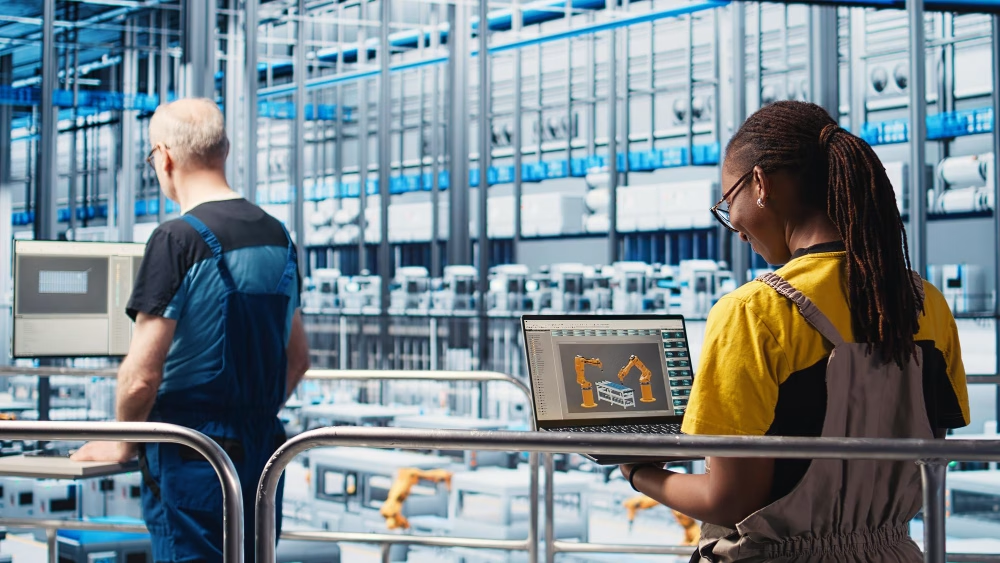
Digital twin technology represents one of the most sophisticated applications of Internet of Things data in manufacturing, creating virtual replicas of physical assets, processes, and entire production systems. These digital representations enable simulation, optimization, and predictive analysis that would be impossible with physical systems alone.
Manufacturing digital twins integrate real-time data from Internet of Things sensors with detailed physical models to create accurate virtual representations of production equipment and processes. These models can simulate different operating conditions, test optimization strategies, and predict the impact of changes before they are implemented in the physical world. This capability reduces the risk of production disruptions while enabling continuous improvement initiatives.
Process digital twins model entire production workflows, including material flows, equipment interactions, and quality control processes. These comprehensive models can optimize production schedules, identify bottlenecks, and evaluate the impact of new products or process changes. Integration with enterprise resource planning systems enables holistic optimization that considers both operational and business constraints.
Product digital twins follow manufactured items throughout their lifecycle, from initial production through field operation and eventual disposal. Internet of Things sensors embedded in products provide real-time performance data that updates the digital twin, enabling predictive maintenance, performance optimization, and design improvement initiatives. This comprehensive product lifecycle management approach improves customer satisfaction while reducing warranty costs and support requirements.
Facility digital twins model entire manufacturing sites, including buildings, utilities, and environmental systems. These models can optimize facility operations, plan expansions, and evaluate the impact of new equipment installations. Integration with building management systems enables comprehensive facility optimization that considers both production requirements and operational costs.
The implementation of Internet of Things technologies in manufacturing is fundamentally changing how workers interact with production systems, creating new opportunities for human-machine collaboration while enhancing worker safety and productivity. This evolution requires careful consideration of both technological capabilities and human factors to ensure successful integration.
Augmented reality systems provide workers with real-time information overlays that enhance their ability to perform complex tasks and make informed decisions. Smart glasses display equipment status, maintenance instructions, and quality control information directly in the worker’s field of view, reducing errors while improving productivity. These systems can also provide remote expert assistance, enabling experienced technicians to guide less experienced workers through complex procedures.
Wearable Internet of Things devices monitor worker health and safety conditions in real-time. Environmental sensors detect exposure to hazardous substances, while biometric sensors monitor vital signs and fatigue levels. This continuous monitoring enables immediate response to safety issues while providing data for long-term health and safety program improvements.
Collaborative robots, or cobots, work alongside human operators to perform tasks that require both human judgment and robotic precision. Internet of Things sensors enable these systems to respond safely to human presence while optimizing their performance based on current production requirements. Advanced safety systems ensure that cobots immediately stop or adjust their operations when humans enter their work areas.
Skills development platforms utilize Internet of Things data to identify training needs and provide personalized learning experiences. These systems can track worker performance, identify areas for improvement, and recommend specific training programs based on current and future job requirements. Integration with virtual reality training systems provides immersive learning experiences that prepare workers for complex or dangerous scenarios.
Internet of Things technologies are extending beyond the factory floor to create intelligent, connected supply chains that optimize everything from raw material procurement to finished product delivery. This comprehensive approach to supply chain management enables unprecedented levels of coordination and optimization across complex manufacturing networks.
Supply chain visibility systems track materials and products throughout their journey from suppliers to customers. Internet of Things sensors monitor shipment conditions, track locations, and predict delivery times with high accuracy. This real-time visibility enables proactive management of supply chain disruptions while optimizing inventory levels and reducing carrying costs.
Supplier performance monitoring systems track quality, delivery performance, and other key metrics for all supply chain partners. Internet of Things sensors at receiving docks automatically inspect incoming materials, while tracking systems monitor supplier delivery performance and reliability. This comprehensive monitoring enables data-driven supplier management decisions while identifying opportunities for supply chain optimization.
Demand forecasting systems integrate Internet of Things data from production systems, retail outlets, and even end-use applications to create accurate demand predictions. Machine learning algorithms analyze patterns in historical data, current market conditions, and external factors to generate forecasts that improve inventory management and production planning decisions.
Logistics optimization systems coordinate transportation, warehousing, and distribution activities based on real-time conditions and predictive analytics. Route optimization algorithms consider traffic conditions, delivery windows, and vehicle capabilities to minimize transportation costs while maintaining service levels. Integration with customer systems enables dynamic delivery scheduling that optimizes both supplier and customer operations.

The increasing connectivity of manufacturing systems creates new cybersecurity challenges that require comprehensive security strategies and advanced threat detection capabilities. Industrial cybersecurity must balance the need for connectivity and data sharing with the critical requirement to protect manufacturing operations from cyber threats.
Network segmentation strategies isolate critical manufacturing systems from corporate networks and external connections. These architectures use firewalls, virtual LANs, and other security technologies to create secure zones that limit the potential impact of security breaches. Zero-trust security models verify every device and data transmission, ensuring that only authorized systems can access critical manufacturing resources.
Device security management systems track and manage all Internet of Things devices connected to manufacturing networks. These systems maintain device inventories, monitor for security vulnerabilities, and automatically apply security updates when they become available. Device authentication systems ensure that only authorized devices can connect to manufacturing networks.
Threat detection systems monitor network traffic patterns, device behaviors, and system logs to identify potential security breaches. Machine learning algorithms establish baseline behavior patterns for manufacturing systems and immediately alert security teams when anomalous activities are detected. Automated response systems can isolate compromised systems and implement countermeasures to prevent the spread of cyber attacks.
Security awareness training programs ensure that manufacturing personnel understand their role in maintaining cybersecurity. These programs cover topics such as phishing prevention, password security, and incident reporting procedures. Regular security assessments and penetration testing identify vulnerabilities before malicious actors can exploit them.
The convergence of the Internet of Things with other advanced manufacturing technologies is creating synergistic effects that multiply the benefits of individual technology implementations. This integration enables new capabilities that would be impossible with any single technology alone.
Additive manufacturing systems integrated with Internet of Things sensors provide real-time monitoring of printing processes, material usage, and part quality. These systems can automatically adjust printing parameters based on environmental conditions and material properties while providing detailed documentation for quality control and regulatory compliance purposes.
Robotic systems enhanced with Internet of Things capabilities provide autonomous operation with minimal human supervision. Advanced sensors enable robots to adapt to changing conditions, collaborate safely with human workers, and optimize their performance based on current production requirements. Machine learning algorithms continuously improve robotic performance by analyzing operational data and identifying optimization opportunities.
Advanced materials processing systems utilize Internet of Things sensors to monitor and control complex manufacturing processes such as composite curing, metal additive manufacturing, and precision machining. These systems can maintain optimal processing conditions while providing detailed process documentation for quality control and regulatory compliance.
Artificial intelligence systems integrate data from all manufacturing technologies to provide holistic optimization and control capabilities. These systems can coordinate the operation of multiple production lines, optimize material flows, and balance competing objectives such as quality, speed, and cost. Advanced AI systems can even identify opportunities for process improvements and recommend specific actions to optimize overall manufacturing performance.
Return on Investment and Business Impact
The implementation of Internet of Things technologies in manufacturing requires significant investments in equipment, infrastructure, and personnel, making return on investment analysis a critical component of any IoT initiative. Understanding the financial impact of these investments is essential for making informed decisions and securing ongoing support for digital transformation efforts.
Cost reduction opportunities from Internet of Things implementations are typically substantial and measurable. Predictive maintenance programs commonly reduce maintenance costs by 25-40% while extending equipment life by 20-30%. Energy management systems often achieve energy cost reductions of 15-25%, while quality improvement initiatives can reduce rework and scrap costs by similar amounts.
Productivity improvements from Internet of Things systems often provide the largest returns on investment. Real-time monitoring and optimization can increase overall equipment effectiveness by 15-30%, while improved scheduling and coordination can increase facility throughput by 10-25%. These productivity gains directly impact profitability and competitive positioning.
Revenue enhancement opportunities arise from improved product quality, faster time-to-market, and new service offerings enabled by Internet of Things technologies. Manufacturing companies can offer predictive maintenance services for their products, optimize customer operations, and develop new business models based on performance-based contracts.
Risk reduction benefits, while sometimes challenging to quantify, can provide substantial value through avoided costs and improved operational reliability. Reduced regulatory compliance risks, improved worker safety, and enhanced cybersecurity all contribute to the overall value proposition of Internet of Things investments.
The future of the Internet of Things in manufacturing continues to evolve rapidly, with emerging technologies promising even greater capabilities and value propositions. Understanding these trends is essential for developing long-term IoT strategies that remain relevant and competitive.
Artificial intelligence integration is becoming more sophisticated, with machine learning algorithms that can optimize entire manufacturing networks rather than individual processes. Advanced AI systems will provide autonomous operation capabilities that minimize human intervention while maximizing performance across multiple objectives.
Edge computing capabilities are expanding to support more complex processing tasks closer to data sources. Edge AI systems will provide real-time decision-making capabilities with minimal latency while reducing bandwidth requirements and improving system resilience.
5G and future wireless technologies will enable new applications that require ultra-low latency and high bandwidth capabilities. These networks will support advanced robotics, real-time control systems, and immersive training applications that were previously impossible with existing wireless technologies.
Quantum computing technologies may eventually provide breakthrough capabilities for optimization problems, materials discovery, and complex system modeling that are beyond the capabilities of current computing systems.
The transformation of industrial manufacturing through Internet of Things technologies represents a fundamental shift in how factories operate, optimize, and compete in global markets. The connected factory floor, enabled by sophisticated sensors, intelligent analytics, and automated control systems, provides unprecedented levels of operational visibility, efficiency, and responsiveness.
The implementation of Internet of Things systems in manufacturing environments delivers measurable benefits across multiple dimensions, from reduced operating costs and improved product quality to enhanced worker safety and environmental sustainability. These benefits are not merely theoretical possibilities but proven outcomes that leading manufacturers are achieving today through strategic IoT investments.
The key to successful Internet of Things implementation lies in understanding that this technology transformation extends far beyond simply installing sensors and collecting data. It requires a comprehensive approach that encompasses technology infrastructure, data analytics capabilities, workforce development, and organizational change management. Companies that approach IoT implementation with this holistic perspective are positioned to achieve the full potential of connected manufacturing.
As manufacturing continues to evolve toward increasingly connected, intelligent, and autonomous operations, Internet of Things technologies will remain at the center of this transformation. The factories of the future will be defined by their ability to seamlessly integrate physical and digital systems, creating manufacturing environments that are more efficient, sustainable, and responsive to changing market demands than ever before possible.
The journey toward fully connected manufacturing is ongoing, with new technologies and capabilities continuously emerging. Organizations that begin this transformation today, with proper planning and strategic vision, will be best positioned to capitalize on the tremendous opportunities that Internet of Things technologies provide for manufacturing excellence and competitive advantage.