
Senior Editor, Industrial Marketing Solution Expert
Warehouse operations form the backbone of modern logistics, and at the heart of these operations are forklift trucks – the workhorses that keep goods moving efficiently from receiving to shipping. Understanding the diverse types of forklift trucks available and their specific applications is crucial for warehouse managers seeking to optimize their operations, maximize storage capacity, and ensure workplace safety.
Forklift trucks have evolved significantly from their humble beginnings, transforming into sophisticated machines that can handle everything from lightweight pallets to massive industrial loads. The selection of appropriate forklift trucks directly impacts warehouse productivity, storage density, and operational costs. With numerous types available, each designed for specific tasks and environments, making the right choice requires a thorough understanding of your warehouse’s unique requirements.
The Occupational Safety and Health Administration (OSHA) has established a comprehensive classification system that categorizes forklift trucks into seven distinct classes based on their design, power source, and intended use. This classification system helps warehouse operators understand the specific capabilities and limitations of different forklift trucks, ensuring they select the most appropriate equipment for their operations.

Class I forklift trucks represent the most common type found in indoor warehouse environments. These electric-powered machines are designed for sit-down or stand-up operation and are particularly well-suited for applications where emissions and noise must be minimized. Electric forklift trucks in this category typically offer lifting capacities ranging from 3,000 to 40,000 pounds, making them versatile enough for most warehouse applications.
The primary advantage of Class I forklift trucks lies in their environmental friendliness and operational efficiency. Since they produce zero emissions during operation, these machines are ideal for food processing facilities, pharmaceutical warehouses, and other environments where air quality is paramount. Additionally, their quiet operation makes them perfect for facilities that operate during extended hours or in noise-sensitive areas.
Electric forklift trucks also offer superior maneuverability compared to their internal combustion counterparts. Their compact design and precise control systems allow operators to navigate narrow aisles and tight spaces with confidence. The battery systems in modern electric forklift trucks have also improved significantly, with many models offering 8-16 hours of continuous operation on a single charge.

Class II forklift trucks are specifically engineered for operations in confined spaces and narrow aisles. These machines are designed to maximize storage density by allowing warehouses to reduce aisle widths while maintaining operational efficiency. The category includes reach trucks, order pickers, and side loaders, each serving specific purposes in warehouse operations.
Narrow aisle forklift trucks can operate efficiently in aisles as narrow as 8-10 feet, compared to the 12-14 feet required by conventional counterbalance forklift trucks. This capability can increase storage capacity by up to 50% in the same warehouse footprint, making them invaluable for facilities where space optimization is critical.
The sophisticated mast systems on Class II forklift trucks allow for precise load placement at heights exceeding 30 feet in some models. Advanced safety features, including automatic speed reduction in turns and enhanced visibility systems, ensure safe operation even in challenging warehouse environments.

Class III encompasses the simplest and most cost-effective category of material handling equipment. This classification includes manual pallet trucks, electric pallet jacks, and walkie-stackers. While these forklift trucks may not offer the lifting capacity or versatility of larger machines, they excel in specific applications where their simplicity and maneuverability are advantageous.
Electric pallet jacks represent the most basic form of powered material handling equipment. These machines are designed primarily for horizontal movement of palletized loads over short distances. Their low profile and compact design make them ideal for loading and unloading trucks, moving materials between work areas, and handling goods in retail environments.
Walkie stackers bridge the gap between simple pallet jacks and full-sized forklift trucks. These machines offer modest lifting capabilities, typically reaching heights of 6-8 feet, while maintaining the compact footprint and ease of operation that characterizes Class III equipment.

Counterbalance forklift trucks are the most recognizable and widely used type of material handling equipment in warehouses worldwide. These machines derive their name from the large counterweight positioned at the rear of the vehicle, which balances the load carried on the front forks. This design allows the forklift trucks to carry loads without requiring additional support structures or attachments.
The versatility of counterbalance forklift trucks makes them suitable for both indoor and outdoor applications. They excel at loading and unloading trucks, moving materials over moderate distances, and handling a wide variety of load types. Modern counterbalance forklift trucks are available with lifting capacities ranging from 3,000 to over 100,000 pounds, accommodating virtually any warehouse requirement.
One of the key advantages of counterbalance forklift trucks is their ability to approach loads from the front without requiring special positioning or maneuvering. This capability makes them particularly effective for truck loading operations where speed and efficiency are critical. However, their design requires wider aisles compared to specialized narrow aisle equipment, typically necessitating aisle widths of 12-14 feet for safe operation.
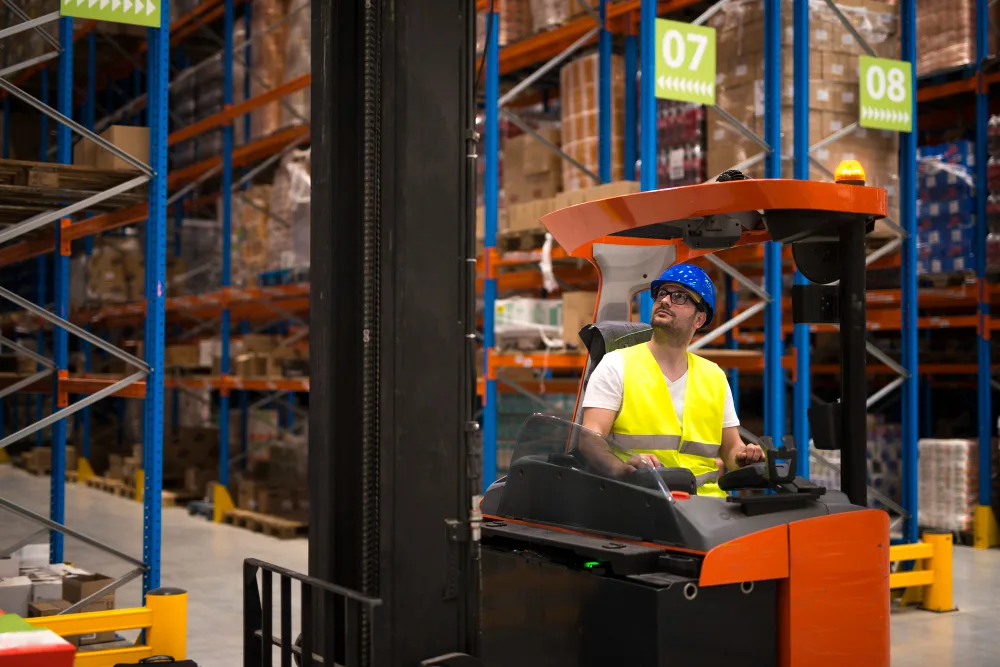
Reach forklift trucks represent a significant advancement in warehouse material handling technology. These machines are specifically designed to operate in narrow aisles while providing excellent lifting capabilities and precise load placement. The distinguishing feature of reach forklift trucks is their ability to extend the forks beyond the front wheels, allowing them to “reach” into racking systems without requiring the entire vehicle to enter the storage bay.
The compact design of reach forklift trucks enables them to operate in aisles as narrow as 8-10 feet while maintaining the ability to lift loads to heights exceeding 35 feet. This capability makes them invaluable for high-density storage applications where maximizing vertical space utilization is essential. Modern reach forklift trucks incorporate advanced mast technologies, including telescopic and pantograph designs, to achieve these impressive lifting heights while maintaining stability.
Reach forklift trucks also offer superior operator visibility compared to counterbalance models. The open design of the overhead guard and the forward positioning of the operator provide excellent sightlines to the load and surrounding area. This enhanced visibility, combined with precise hydraulic controls, allows operators to place loads with exceptional accuracy, even at significant heights.

Order picker forklift trucks represent a specialized category explicitly designed for piece-picking operations in warehouse environments. Unlike traditional forklift trucks that handle entire pallets, order pickers are designed to elevate the operator to the picking level, allowing direct access to individual items stored on warehouse shelving.
These forklift trucks feature a small operator platform that rises with the mast, providing the operator with direct access to stored products. Modern order picker forklift trucks can reach heights of up to 40 feet, enabling efficient picking operations in high-bay warehouses. The platform is equipped with controls that allow the operator to maneuver the machine while elevated, providing flexibility and efficiency in picking operations.
Safety features on order picker forklift trucks are particularly comprehensive due to the elevated nature of the work. These machines typically include fall protection systems, emergency lowering capabilities, and stability monitoring systems. Advanced models also incorporate picking aids, such as voice-directed systems and inventory management integration, to further enhance productivity.
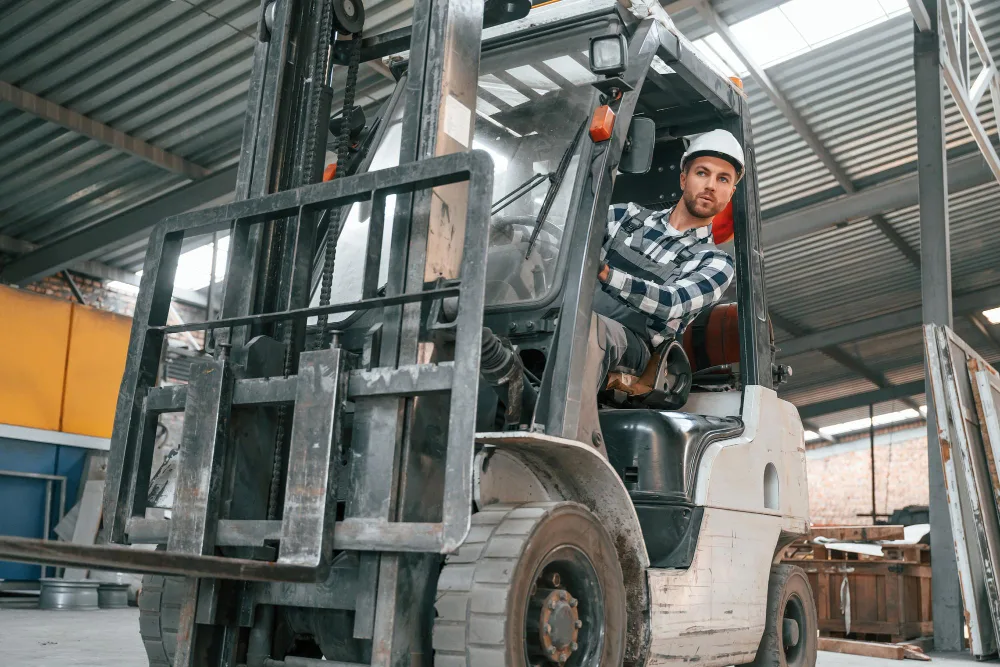
Side loader forklift trucks are specialized machines designed for handling long, bulky materials that would be impractical to manage with conventional front-loading equipment. These forklift trucks are equipped with forks that extend perpendicular to the vehicle’s direction of travel, allowing them to pick up loads from the side rather than the front.
The unique design of side loader forklift trucks makes them invaluable for handling materials such as lumber, steel beams, pipes, and sheet materials. Their ability to carry long loads parallel to the vehicle’s length allows them to navigate through standard doorways and aisles that would be impossible to traverse with the same materials loaded on conventional forklift trucks.
Modern side loader forklift trucks often incorporate multidirectional steering systems that allow them to move in any direction – forward, backward, sideways, or diagonally. This capability offers exceptional maneuverability in tight spaces and enables the precise positioning of long materials in storage areas. Some models also feature rotating forks that can be positioned at various angles to accommodate different load configurations.

Rough terrain forklift trucks are specifically engineered for outdoor applications where conventional warehouse equipment would be unsuitable. These robust machines are designed to operate on uneven surfaces, gravel, mud, and other challenging terrain conditions commonly encountered in construction sites, lumber yards, and outdoor storage facilities.
The key distinguishing features of rough terrain forklift trucks include large, aggressive tread tires, enhanced ground clearance, and powerful engines that can maintain performance in demanding conditions. These machines typically feature four-wheel-drive systems and may include additional traction aids such as differential locks to ensure mobility in challenging situations.
Rough-terrain forklift trucks are available in several configurations to accommodate various applications. Vertical mast models provide traditional lifting capabilities for general material handling. At the same time, telescopic handlers offer extended reach capabilities for applications such as loading materials onto elevated platforms or reaching into truck beds from the side.

Telescopic handler forklift trucks, also known as telehandlers, represent a unique category that combines the lifting capabilities of traditional forklift trucks with the extended reach of construction equipment. These versatile machines feature a telescoping boom that can extend horizontally while lifting vertically, providing capabilities that conventional forklift trucks cannot match.
The telescoping boom on these forklift trucks can typically extend 20-40 feet horizontally while lifting loads to comparable heights. This capability makes them invaluable for applications such as loading materials onto rooftops, placing items in elevated storage areas, and handling materials in locations where conventional forklift trucks cannot reach.
Modern telescopic handler forklift trucks are available with a wide variety of attachments, including standard forks, buckets, lifting platforms, and specialized handling tools. This versatility enables a single machine to perform multiple functions, thereby reducing the need for separate equipment and enhancing operational efficiency.
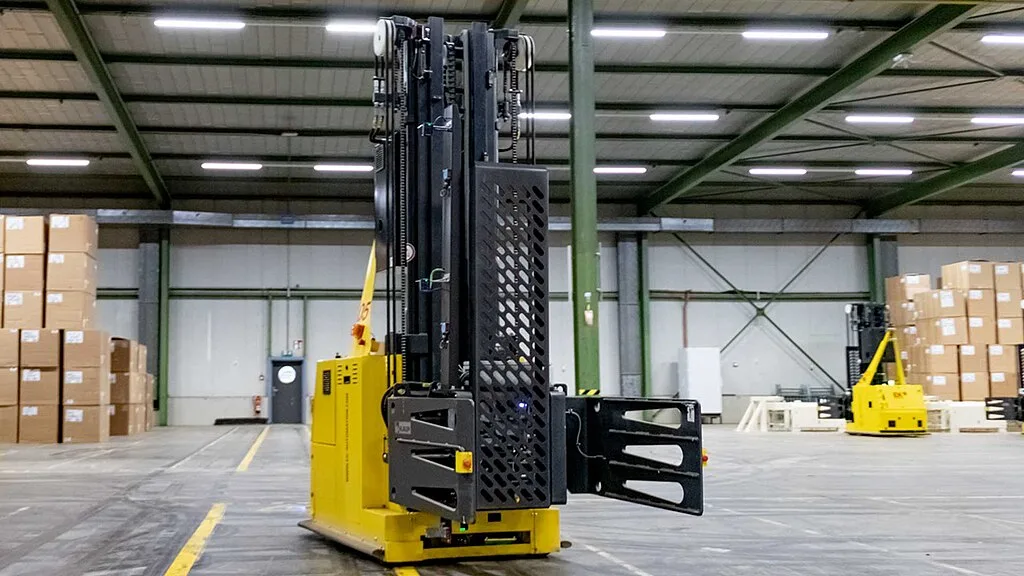
The integration of automation technology has revolutionized warehouse operations, and AGV forklift trucks represent the cutting edge of this technological advancement. These intelligent machines combine traditional forklift truck capabilities with sophisticated navigation and control systems, enabling them to operate autonomously within warehouse environments.
AGV forklift trucks utilize various navigation technologies, including laser guidance, magnetic strips, and advanced vision systems, to navigate predetermined routes within the warehouse. These systems allow the machines to pick up, transport, and deliver loads without human intervention, operating continuously and consistently throughout the facility.
The benefits of AGV forklift trucks extend beyond simple automation. These machines can operate in environments that may be hazardous to human workers, such as freezer warehouses or facilities with toxic atmospheres. They also provide consistent performance without the variations associated with human operators, leading to improved efficiency and reduced product damage.
Integration with warehouse management systems allows AGV forklift trucks to receive real-time instructions and coordinate their activities with other warehouse operations. This connectivity enables dynamic route optimization, load prioritization, and efficient resource allocation throughout the facility.
The quest for maximum storage density has driven the development of increasingly sophisticated narrow aisle forklift trucks. These specialized machines are designed to operate in aisles as narrow as 5-6 feet while maintaining the ability to handle standard palletized loads and reach significant heights.
Very narrow aisle (VNA) forklift trucks often incorporate wire guidance systems that allow them to operate automatically within the narrow confines of high-density storage areas. These guidance systems eliminate the need for precise manual steering, reducing the risk of collisions and enabling faster operation in confined spaces.
The design of narrow aisle forklift trucks prioritizes stability and precision over speed. These machines typically feature enhanced mast systems with multiple stages of extension and sophisticated load-handling attachments that can rotate and position loads with exceptional accuracy. Some models incorporate pantograph reaching mechanisms that enable the forks to extend several feet into the racking system, allowing for precise load placement.
Trilateral forklift trucks represent the ultimate in narrow aisle material handling technology. These highly specialized machines are designed to operate in aisles as narrow as 6 feet while providing the ability to access storage locations on both sides of the aisle without turning the vehicle.
The distinguishing feature of trilateral forklift trucks is their ability to rotate the fork carriage 180 degrees, allowing access to storage locations on either side of the aisle. This capability eliminates the need for the vehicle to turn around in the aisle, significantly reducing the required aisle width and maximizing storage density.
Modern trilateral forklift trucks often incorporate man-up designs that elevate the operator with the load, providing direct visual control of load placement operations. These machines can reach heights exceeding 40 feet while operating in extremely narrow aisles, making them ideal for high-density storage applications where space utilization is critical.
Electric forklift trucks have become increasingly popular in warehouse applications due to their environmental benefits, operational efficiency, and lower total cost of ownership. These machines are powered by rechargeable battery systems that provide clean, quiet operation ideal for indoor environments.
Modern electric forklift trucks utilize advanced battery technologies, including lithium-ion systems that offer faster charging, longer operating life, and reduced maintenance requirements compared to traditional lead-acid batteries. These improvements have significantly enhanced the practicality of electric forklift trucks for demanding warehouse applications.
The operational advantages of electric forklift trucks include instant torque delivery, precise speed control, and regenerative braking systems that recover energy during deceleration. These features contribute to improved efficiency and reduced operating costs compared to internal combustion alternatives.
Electric forklift trucks are particularly well-suited for applications in food processing, pharmaceutical manufacturing, and other environments where emissions and contamination must be minimized. Their quiet operation also makes them ideal for facilities that operate during extended hours or in noise-sensitive areas.
Internal combustion forklift trucks remain essential for many warehouse operations, particularly those that require high lifting capacities, extended operating periods, or outdoor use. These machines are available with gasoline, diesel, or liquid propane (LP) fuel systems, each offering specific advantages for different applications.
Diesel-powered forklift trucks provide exceptional power and fuel efficiency, making them ideal for heavy-duty applications and outdoor operations. These machines can operate continuously for extended periods with quick refueling, making them suitable for high-volume operations where downtime must be minimized.
LP-powered forklift trucks offer a compromise between the power of internal combustion engines and the cleaner operation of electric systems. These machines produce fewer emissions than gasoline or diesel alternatives while providing the ability to refuel quickly and operate continuously.
The choice between electric and internal combustion forklift trucks depends on various factors, including application requirements, environmental considerations, operating patterns, and cost considerations. Many warehouses utilize a mixed fleet to optimize performance across different operational areas.

The selection of appropriate forklift trucks begins with a thorough analysis of load requirements and capacity needs. Understanding the weight, dimensions, and characteristics of the materials to be handled is essential for selecting equipment with adequate lifting capacity and stability.
Load capacity must be evaluated not only in terms of maximum weight but also in consideration of the load center and lifting height requirements. The load center – the distance from the face of the forks to the center of gravity of the load – significantly affects the lifting capacity of forklift trucks. Loads with centers of gravity farther from the forks reduce the effective lifting capacity.
It’s essential to consider not only current load requirements but also future needs that may arise as operations expand or evolve. Selecting forklift trucks with modest excess capacity provides flexibility for handling occasional heavier loads and accommodates future growth without requiring the replacement of the equipment.
The physical layout of the warehouse plays a crucial role in determining the most suitable types of forklift trucks. Aisle width, ceiling height, floor conditions, and traffic patterns all influence equipment selection and operational efficiency.
Aisle width is one of the most critical factors in forklift truck selection. Counterbalance forklift trucks typically require aisles of 12-14 feet for safe operation, while reach trucks can operate in aisles as narrow as 8-10 feet. Very narrow aisle equipment can function in spaces as tight as 5-6 feet, maximizing storage density, but it requires specialized equipment and operational procedures.
Ceiling height limitations may restrict the maximum lifting height available, influencing the selection of forklift trucks and racking systems. The relationship between lifting height and equipment stability must also be considered, as higher lifts may require wider aisles or specialized stability systems to ensure stability.
Understanding the operational patterns within the warehouse is essential for selecting forklift trucks that optimize productivity and efficiency. Factors such as operating hours, duty cycles, travel distances, and handling frequencies all influence the selection of equipment.
Facilities with continuous operation requirements may benefit from internal combustion forklift trucks that can be refueled quickly or from electric systems with opportunity charging capabilities. Operations with predictable duty cycles may find that standard electric forklift trucks with overnight charging meet their needs effectively.
The nature of warehouse operations also influences the selection of equipment. Facilities focused on pallet handling may benefit from counterbalance or reach forklift trucks. At the same time, those with significant piece-picking requirements may need to order picker equipment or specialized material handling systems.
Proper operator training is fundamental to safe forklift truck operation and is required by OSHA regulations. Comprehensive training programs must cover equipment operation, safety procedures, and site-specific requirements to ensure safe and efficient operations.
Training programs should include both classroom instruction and hands-on operation under supervision. Operators must demonstrate competency in equipment operation, load handling, and safety procedures before being certified to operate forklift trucks independently.
Ongoing training and periodic recertification help ensure that operators maintain their skills and stay current with safety requirements and best practices. Regular safety meetings and refresher training sessions help maintain a culture of safety within the warehouse environment.
Regular maintenance and inspection are essential for safe and efficient forklift truck operation. Daily pre-operation inspections help identify potential problems before they become safety hazards or cause equipment failures.
Maintenance schedules should follow the manufacturer’s recommendations and include regular service intervals for critical components, such as brakes, hydraulic systems, and mast assemblies. Proper maintenance not only ensures safety but also extends equipment life and maintains operational efficiency.
Documentation of maintenance activities and inspection results provides valuable information for tracking equipment conditions and identifying trends that may indicate developing problems. This information can also be important for warranty claims and regulatory compliance.
Creating a safe warehouse environment requires careful attention to traffic management, pedestrian safety, and equipment operation procedures. Clear traffic patterns, appropriate signage, and designated pedestrian areas help prevent accidents and improve operational efficiency.
Speed limits and operational procedures should be established based on the warehouse’s specific conditions and communicated clearly to all personnel. Designated travel routes, intersection protocols, and load-handling procedures contribute to safe operations.
Emergency procedures and evacuation plans must account for the presence of forklift trucks and ensure that equipment can be safely secured in the event of an emergency. Regular safety drills and training help ensure that all personnel understand their roles in maintaining a safe work environment.
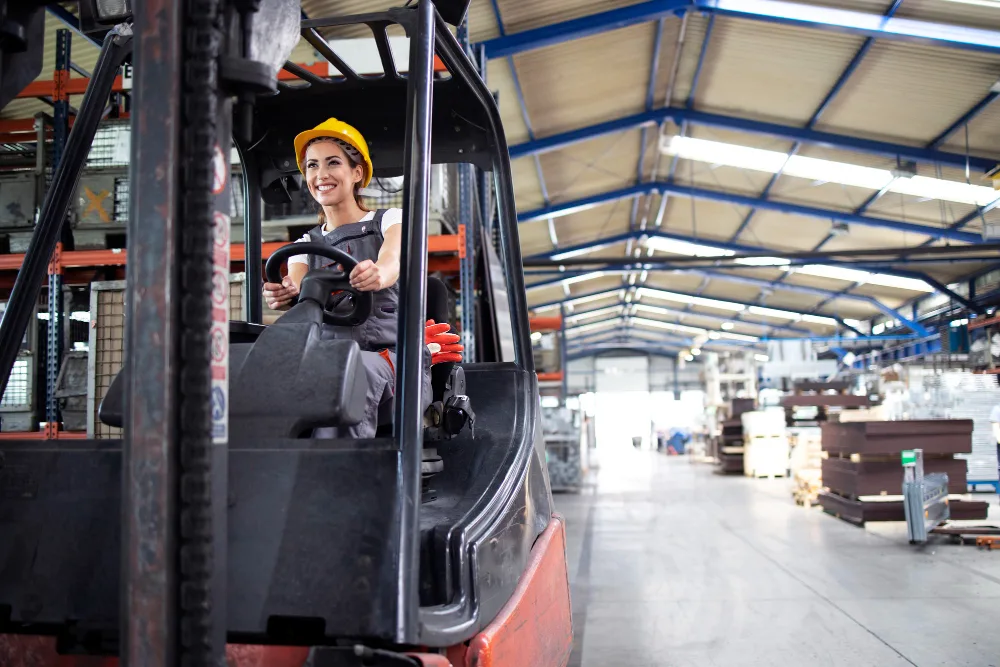
The integration of artificial intelligence and machine learning technologies is transforming forklift truck capabilities and warehouse operations. Smart systems can optimize routes, predict maintenance needs, and automatically adapt to changing operational conditions.
Advanced sensors and vision systems enable forklift trucks to operate more safely and efficiently in dynamic warehouse environments. These technologies can detect obstacles, monitor load conditions, and provide real-time feedback to operators or control systems, enabling more efficient operation.
The development of fully autonomous forklift trucks continues to advance, with systems capable of handling increasingly complex tasks without human intervention. These technologies promise to improve further safety, efficiency, and consistency in warehouse operations.
Environmental sustainability is becoming increasingly important in warehouse operations, driving the development of more efficient and environmentally friendly forklift truck technologies. Electric systems continue to improve in capability and cost-effectiveness, expanding their applicability to more demanding applications.
Alternative fuel technologies, including hydrogen fuel cells and biofuels, offer the potential for clean operation with the performance characteristics of traditional internal combustion systems. These technologies may offer solutions for applications where battery-electric systems are impractical.
Energy management systems and regenerative technologies help improve the overall efficiency of forklift truck operations, reducing energy consumption and operating costs while minimizing environmental impact.
The selection of appropriate forklift trucks is fundamental to efficient warehouse operations and directly impacts productivity, safety, and operational costs. Understanding the diverse types of forklift trucks available and their specific capabilities enables warehouse managers to make informed decisions that optimize their operations for current and future needs.
From basic pallet jacks to sophisticated automated systems, the range of forklift truck technologies available continues to expand, offering solutions for virtually every warehouse application. The key to success lies in carefully analyzing operational requirements, understanding the capabilities and limitations of different equipment types, and selecting systems that provide the best combination of performance, safety, and cost-effectiveness.
As warehouse operations continue to evolve and technology advances, forklift trucks will undoubtedly continue to play a central role in material handling operations. Staying informed about new technologies and best practices enables warehouse operations to adapt and thrive in an increasingly competitive marketplace while maintaining the highest standards of safety and efficiency.
The investment in appropriate forklift truck systems, combined with proper training, maintenance, and operational procedures, provides the foundation for successful warehouse operations that can adapt to changing requirements and support business growth for years to come.